
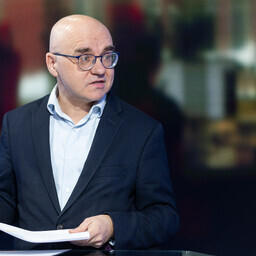
The chairman of the ERR board, Erik Roose, stated that ERR faces significant funding issues.
The ERR service costs each Estonian 8 cents per day. Over the past 18 years, the purchasing power of money has decreased by a third.
Public broadcasting receives funding from the state budget. However, the funds are scarce, and the exact amount is unknown until the end of the year, making planning difficult.
EU regulations state that funding must be sufficient and known in advance. In Estonia, this is not the case.
In 2008, ERR's budget was 23 million euros. Today, due to inflation, it is 17 million euros. The purchasing power is much lower.
There are fewer employees than before. Technology has improved, but there is not enough money for major events like the Olympic Games.
In other European countries, public broadcasting is funded with an average of 50 euros per year. In Estonia, it is 30 euros.
Roose says ERR is very efficient. But there is not enough money to produce new programs. Dramas and music shows are being produced very rarely.
The public trusts ERR the most. But the lack of funds could lead to an inability to produce news.