
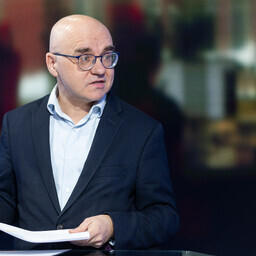
ERR-i juhatuse esimees Erik Roose rääkis, et ERR-il on
suured rahastusprobleemid
.
suured rahastusprobleemid
Tõlge fraasile: suured rahastusprobleemid
EN
significant funding problems
ERR teenus maksab iga eestlasele 8 senti päevas. Viimase 18 aastaga on
raha ostujõud
kolmandiku võrra vähenenud.
raha ostujõud
Tõlge fraasile: raha ostujõud
EN
purchasing power of money
Rahvusringhääling saab raha
riigieelarvest
. Aga raha on vähe ja seda ei tea enne aasta lõppu. See teeb plaanimise raskeks.
riigieelarvest
Tõlge fraasile: riigieelarvest
EN
from the state budget
Euroopa Liidu reeglid ütlevad, et rahastus peab olema
piisav ja ette teada
. Eestis see nii ei ole.
piisav ja ette teada
Tõlge fraasile: piisav ja ette teada
EN
sufficient and known in advance
2008. aastal oli ERR-i eelarve 23 miljonit eurot. Tänaseks on see
inflatsiooni tõttu
17 miljonit. Ostujõud on palju väiksem.
inflatsiooni tõttu
Tõlge fraasile: inflatsiooni tõttu
EN
due to inflation
Töötajaid on vähem kui varem. Tehnoloogia on parem, aga raha ei jätku suurtele üritustele nagu olümpiamängud.
Teistes Euroopa riikides makstakse
avalik-õiguslikule ringhäälingule
keskmiselt 50 eurot aastas. Eestis on see 30 eurot.
avalik-õiguslikule ringhäälingule
Tõlge fraasile: avalik-õiguslikule ringhäälingule
EN
public broadcasting
Roose ütleb, et
ERR on väga efektiivne
. Aga raha ei jätku
uute saadete tegemiseks
. Draamasid ja muusikasaateid tehakse väga vähe.
ERR on väga efektiivne
Tõlge fraasile: ERR on väga efektiivne
EN
ERR is very efficient
uute saadete tegemiseks
Tõlge fraasile: uute saadete tegemiseks
EN
for producing new shows
Rahvas usaldab ERR-i kõige rohkem. Aga raha puudumine võib viia selleni, et
uudiseid ei saa teha
.
uudiseid ei saa teha
Tõlge fraasile: uudiseid ei saa teha
EN
cannot produce news
The chairman of the ERR board, Erik Roose, stated that ERR faces significant funding issues.
The ERR service costs each Estonian 8 cents per day. Over the past 18 years, the purchasing power of money has decreased by a third.
Public broadcasting receives funding from the state budget. However, the funds are scarce, and the exact amount is unknown until the end of the year, making planning difficult.
EU regulations state that funding must be sufficient and known in advance. In Estonia, this is not the case.
In 2008, ERR's budget was 23 million euros. Today, due to inflation, it is 17 million euros. The purchasing power is much lower.
There are fewer employees than before. Technology has improved, but there is not enough money for major events like the Olympic Games.
In other European countries, public broadcasting is funded with an average of 50 euros per year. In Estonia, it is 30 euros.
Roose says ERR is very efficient. But there is not enough money to produce new programs. Dramas and music shows are being produced very rarely.
The public trusts ERR the most. But the lack of funds could lead to an inability to produce news.