
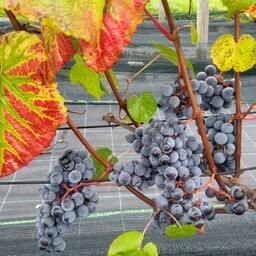
The Ministry of Agriculture is looking for a company to help develop a wine grape variety suitable for Estonia. The new variety must withstand Estonian winters and meet EU requirements.
Scientist Kadri Karp says that the new variety must be winter-hardy, pest-resistant, and produce good wine. It must also comply with EU laws. Estonia belongs to the EU viticulture Zone A, which means strict requirements.
Estonian winters are varied: cold alternates with warmth. Additionally, grape phylloxera could reach Estonia, damaging grapevines. Therefore, it is important to develop a resilient variety.
Scientists have studied which existing varieties could be suitable for the new breeding. For example, the Latvian variety 'Zilga' is resilient, but its wine has American flavor nuances that are not favored in Europe.
For breeding the new variety, it is planned to use 'Zilga' or 'Supaga' as the female parent and the French 'Leon Millot' as the male parent. This combination provides good flavor and resilience.
Grape phylloxera could reach Estonia within 5-10 years. Therefore, it is crucial to develop a variety that is pest-resistant. The variety must also meet EU requirements, such as containing the species Vitis vinifera.
The breeding of the new variety will take time. The first wine can be tasted only after 20 years. The breeding process is long and complex, but scientists are ready for it.
The first berries will be obtained a couple of years after sowing the seeds. Then the best plants will be selected, and tastings will be conducted. Finally, the varieties will be tested in different regions of Estonia.
Estonian producers want a variety that provides stable yields and produces good-tasting wine. Estonian wine could be unique and offer something new in the wine world.