
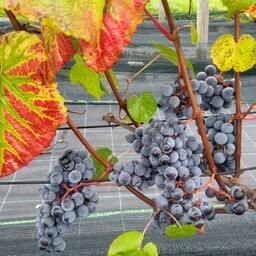
Põllumajandusministeerium otsib ettevõtet, kes aitaks aretada Eestile sobivat veiniviinamarja. Uus sort peab taluma Eesti talvi ja vastama
EL-i nõuetele
.
EL-i nõuetele
Tõlge fraasile: EL-i nõuetele
EN
EU requirements
Teadlane Kadri Karp ütleb, et uus sort peab olema
talvekindel
,
kahjurikindel
ja andma
head veini
. Samuti peab see vastama EL-i seadustele. Eesti kuulub EL-i viinamarjakasvatuse A-tsoonis, mis tähendab rangeid nõudeid.
talvekindel
Tõlge fraasile: talvekindel
EN
winter-hardy
kahjurikindel
Tõlge fraasile: kahjurikindel
EN
pest-resistant
head veini
Tõlge fraasile: head veini
EN
good wine
Eesti talved
on erinevad: külm vaheldub soojaga. Lisaks võib Eestisse jõuda
viinapuutäi
, mis kahjustab viinapuud. Seetõttu on oluline aretada
vastupidav sort
.
Eesti talved
Tõlge fraasile: Eesti talved
EN
Estonian winters
viinapuutäi
Tõlge fraasile: viinapuutäi
EN
grape phylloxera
vastupidav sort
Tõlge fraasile: vastupidav sort
EN
resistant variety
Teadlased on uurinud, millised olemasolevad sordid sobiksid uue aretamiseks. Näiteks Läti sort 'Zilga' on vastupidav, kuid selle veinil on Ameerika maitsenüansid, mis Euroopas ei meeldi.
Uue sordi aretamiseks plaanitakse kasutada
emassordina
'Zilga' või 'Supaga' ja
isassordina
Prantsuse 'Leon Millot'. See kombinatsioon annab hea maitse ja vastupidavuse.
emassordina
Tõlge fraasile: emassordina
EN
as a female variety
isassordina
Tõlge fraasile: isassordina
EN
as a male variety
Viinapuutäi võib Eestisse jõuda 5-10 aasta jooksul. Seetõttu on oluline aretada sort, mis on
kahjurikindel
. Samuti peab sort vastama
EL-i nõuetele
, näiteks sisaldama liiki Vitis vinifera.
kahjurikindel
Tõlge fraasile: kahjurikindel
EN
pest-resistant
EL-i nõuetele
Tõlge fraasile: EL-i nõuetele
EN
EU requirements
Uue sordi aretamine võtab aega. Esimest veini võib proovida alles 20 aasta pärast. Aretusprotsess on pikk ja keerukas, kuid teadlased on valmis selleks.
Esimesed marjad saadakse paar aastat pärast seemnete külvamist. Seejärel valitakse parimad taimed ja tehakse
degustatsioon
e. Lõpuks testitakse sorte erinevates Eesti piirkondades.
degustatsioon
Tõlge fraasile: degustatsioon
EN
tasting
Eesti tootjad tahavad sorti, mis annab stabiilse saagi ja hea maitsega veini.
Eesti vein
võiks olla eriline ja pakkuda midagi uut veinimaailmas.
Eesti vein
Tõlge fraasile: Eesti vein
EN
Estonian wine
The Ministry of Agriculture is looking for a company to help develop a wine grape variety suitable for Estonia. The new variety must withstand Estonian winters and meet EU requirements.
Scientist Kadri Karp says that the new variety must be winter-hardy, pest-resistant, and produce good wine. It must also comply with EU laws. Estonia belongs to the EU viticulture Zone A, which means strict requirements.
Estonian winters are varied: cold alternates with warmth. Additionally, grape phylloxera could reach Estonia, damaging grapevines. Therefore, it is important to develop a resilient variety.
Scientists have studied which existing varieties could be suitable for the new breeding. For example, the Latvian variety 'Zilga' is resilient, but its wine has American flavor nuances that are not favored in Europe.
For breeding the new variety, it is planned to use 'Zilga' or 'Supaga' as the female parent and the French 'Leon Millot' as the male parent. This combination provides good flavor and resilience.
Grape phylloxera could reach Estonia within 5-10 years. Therefore, it is crucial to develop a variety that is pest-resistant. The variety must also meet EU requirements, such as containing the species Vitis vinifera.
The breeding of the new variety will take time. The first wine can be tasted only after 20 years. The breeding process is long and complex, but scientists are ready for it.
The first berries will be obtained a couple of years after sowing the seeds. Then the best plants will be selected, and tastings will be conducted. Finally, the varieties will be tested in different regions of Estonia.
Estonian producers want a variety that provides stable yields and produces good-tasting wine. Estonian wine could be unique and offer something new in the wine world.