
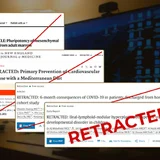
Anton Sokolov is a doctoral student at Tallinn University of Technology. He researches scientific articles and their reliability. He also looks at articles that have been removed from scientific databases. According to Sokolov, the number of retracted studies shows how many problematic works have been found. However, it does not show how many such works actually exist.
In September, Novaator showed how easy it is to buy authorship of a scientific article. With a couple of messages and $800, one can become an article author. But this is just one part of a larger problem. Sokolov investigates what happens to flawed articles once they have entered databases.
Sokolov uses the Retraction Watch database in his work. It compiles retracted articles from around the world. Between 2010 and 2025, approximately 61,000 articles have been retracted. About two articles per thousand are retracted annually. This indicates that there are more problematic articles.
Sokolov studied 15,000 retracted articles. He found that less than 2% of cases were related to authorship. This does not mean that authorship is rarely sold. Publishers find it difficult to prove purchased authorship because the transactions occur in secret conversations.
More frequently, retractions are attributed to issues in peer review. Peer review problems account for about 70% of cases. In articles related to artificial intelligence, a common issue is text generated by programs. This constitutes about a third of cases.
In 2023, the number of retracted articles exceeded 10,000 for the first time. However, this does not show the actual spread of problematic material. Most retracted articles came from publishers' cleanup programs.
There are 13 retractions related to Estonia. 11 of them have co-authors from other countries. About half of the cases are older, such as texts published twice. The rest are newer, dating from 2023.
The impact of paper mills could extend to artificial intelligence systems. Language models are trained based on the internet and scientific works. Therefore, models might also learn from flawed material.
One solution could be a digital signature. Authors could digitally sign their contributions to articles. This would increase transparency and make manipulation of authorship more difficult. Sokolov plans to further investigate this idea.