
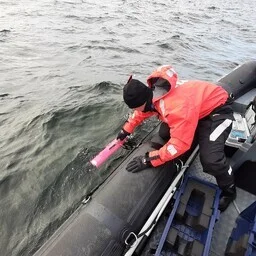
Scientists used a small robot named YUCO-PHYSICO to study the Baltic Sea. This robot was made in France. The robot can measure seawater properties in places that are usually inaccessible.
Before this, scientists used satellites, measuring stations, and research vessels. Satellites only see the sea surface. Measuring stations provide data from one location. Research vessels are expensive and measurements with them are rare.
The robot was tested in Matsalu Bay, the Great Strait, and the open part of the Baltic Sea. Scientists conducted 11 successful tests. The robot is small and lightweight, making it highly mobile.
The robot can measure water temperature, salinity, oxygen content, and more. It can also measure plankton content. The robot can detect oil spills and show where the oil is moving.
Interesting findings were made during the tests. For example, scientists observed how water moved from Väinameri to the Gulf of Livonia. An interesting deep-water vortex was discovered near Osmussaar.
Scientists plan to use the robot to study the Irbe Strait. This strait is very important for the Gulf of Livonia. The robot will help measure water movement and oxygen levels there.
The robot could become an important tool in marine observations. It is well-suited for monitoring events at sea. The robot is also suitable for nature reserves where large ships should not enter.
Scientists from Bulgaria, Turkey, and Japan are participating in the project. They use similar robots in the Black Sea and the Sea of Japan.