
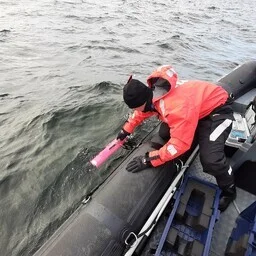
Teadlased kasutasid Läänemere uurimiseks väikest robotit nimega YUCO-PHYSICO. Seda robotit tegi Prantsusmaa. Robot suudab
mõõta merevee omadusi
kohtades, kuhu tavaliselt ei saa minna.
mõõta merevee omadusi
Tõlge fraasile: mõõta merevee omadusi
EN
measure seawater properties
Enne seda kasutasid teadlased
satelliite, mõõtejaamu ja uurimislaevu
. Satelliidid näevad ainult merepinda.
Mõõtejaamad annavad infot ühest kohast
. Uurimislaevad on kallid ja nendega mõõdetakse harva.
satelliite, mõõtejaamu ja uurimislaevu
Tõlge fraasile: satelliite, mõõtejaamu ja uurimislaevu
EN
satellites, measuring stations, and research ships
Mõõtejaamad annavad infot ühest kohast
Tõlge fraasile: Mõõtejaamad annavad infot ühest kohast
EN
Measuring stations provide information from one location
Robotit katsetati Matsalu lahes
, Suures väinas ja Läänemere avaosas. Teadlased tegid 11 edukat katset. Robot on väikese ja kerge, seega on ta hästi liikuv.
Robotit katsetati Matsalu lahes
Tõlge fraasile: Robotit katsetati Matsalu lahes
EN
The robot was tested in Matsalu Bay
Robot suudab mõõta vee temperatuuri
, soolsust, hapnikusisaldust ja veel muud. Ta võib mõõta ka
planktoni sisaldust
. Robot võib mõõta õlilaike ja näidata, kuhu õli liigub.
Robot suudab mõõta vee temperatuuri
Tõlge fraasile: Robot suudab mõõta vee temperatuuri
EN
The robot can measure water temperature
planktoni sisaldust
Tõlge fraasile: planktoni sisaldust
EN
plankton content
Katsete käigus tehti huvitavaid leide. Näiteks nägid teadlased, kuidas
vesi liikus Väinamerest Liivi lahte
. Osmussaare juures avastati
huvitav süvaveekerke
.
vesi liikus Väinamerest Liivi lahte
Tõlge fraasile: vesi liikus Väinamerest Liivi lahte
EN
water moved from Väinameri to the Gulf of Livonia
huvitav süvaveekerke
Tõlge fraasile: huvitav süvaveekerke
EN
interesting deep water upwelling
Teadlased plaanivad robotit kasutada
Irbe väina uurimiseks
. See väin on Liivi lahe jaoks väga tähtis. Robot aitab mõõta, kuidas vesi liigub ja kui palju seal hapnikku on.
Irbe väina uurimiseks
Tõlge fraasile: Irbe väina uurimiseks
EN
to study the Irbe Strait
Robotist võib tulla
tähtis vahend merevaatlustes
. Ta
sobib hästi merel toimuvate sündmuste jälgimiseks
. Robot sobib ka looduskaitsealadele, kuhu ei tohiks sõita suurte laevadega.
tähtis vahend merevaatlustes
Tõlge fraasile: tähtis vahend merevaatlustes
EN
important tool in marine observations
sobib hästi merel toimuvate sündmuste jälgimiseks
Tõlge fraasile: sobib hästi merel toimuvate sündmuste jälgimiseks
EN
well-suited for monitoring marine events
Projekti osalevad Bulgaaria, Türgi ja Jaapani teadlased
. Nad kasutavad sarnaseid roboteid Mustal merel ja Jaapani meres.
Projekti osalevad Bulgaaria, Türgi ja Jaapani teadlased
Tõlge fraasile: Projekti osalevad Bulgaaria, Türgi ja Jaapani teadlased
EN
Scientists from Bulgaria, Turkey, and Japan participate in the project
Scientists used a small robot named YUCO-PHYSICO to study the Baltic Sea. This robot was made in France. The robot can measure seawater properties in places that are usually inaccessible.
Before this, scientists used satellites, measuring stations, and research vessels. Satellites only see the sea surface. Measuring stations provide data from one location. Research vessels are expensive and measurements with them are rare.
The robot was tested in Matsalu Bay, the Great Strait, and the open part of the Baltic Sea. Scientists conducted 11 successful tests. The robot is small and lightweight, making it highly mobile.
The robot can measure water temperature, salinity, oxygen content, and more. It can also measure plankton content. The robot can detect oil spills and show where the oil is moving.
Interesting findings were made during the tests. For example, scientists observed how water moved from Väinameri to the Gulf of Livonia. An interesting deep-water vortex was discovered near Osmussaar.
Scientists plan to use the robot to study the Irbe Strait. This strait is very important for the Gulf of Livonia. The robot will help measure water movement and oxygen levels there.
The robot could become an important tool in marine observations. It is well-suited for monitoring events at sea. The robot is also suitable for nature reserves where large ships should not enter.
Scientists from Bulgaria, Turkey, and Japan are participating in the project. They use similar robots in the Black Sea and the Sea of Japan.