
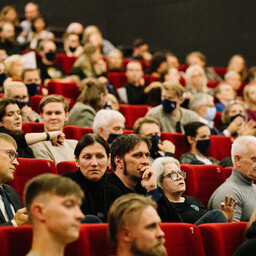
The Estonian film market operates through collaboration between producers, cinemas, and the audience. Filmmakers try to consider viewers' expectations, but audience knowledge has not been systematically studied.
Cinemas organize events and aim to introduce films better. However, Sten Kauber, the author of the doctoral thesis, says that more knowledge about the audience is needed. The audience influences film culture, but producers often rely simply on their own feelings.
Kauber surveyed over 400 cinema visitors and conducted interviews with filmmakers. His work showed that producers start thinking about the audience only when the film is finished.
The Estonian audience goes to the cinema more than many other European countries. Before the coronavirus, the number of cinema visits in Estonia was very high. Estonians love local films that are not seen elsewhere.
The expectations of Estonian viewers for films are very diverse. They enjoy both light entertainment and serious, deep themes. The audience wants to see the Estonian language and local issues. They expect films to help them feel like part of the Estonian nation.
Kauber says that Estonian films are becoming more diverse and stereotypes are disappearing. Filmmakers try to consider the audience, but often do so inconsistently.
Going to the cinema in Estonia is an event. People don't go to the cinema just to watch a movie, but for the experience. Social activity and a good experience are important to them.
Cinemas invest in better screens and seats, as well as meetings with filmmakers. Kauber says that cinemas aim to make cinema visits more interesting with special programs.
The value of films arises in several ways: production, screening, and audience opinions. Kauber recommends that Estonian filmmakers study audience desires more.
The audience influences film culture through ticket purchases. Apollo is Estonia's largest cinema chain and distributor. Kauber says that Apollo can influence audience expectations with better advertising.
Sten Kauber defended his doctoral thesis at Tallinn University on December 3. The work was supervised by professors Indrek Ibrus and Ulrike Rohn.