
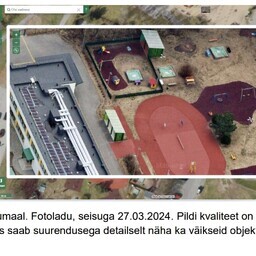
Õiguskantsler Ülle Madise ütles, et geoportaali pildid näitavad liiga palju
inimese eraelu detaile
. See
riivab inimeste privaatsust
.
Maa- ja ruumiamet
i peadirektor Kati Tamtik ütles, et nad teadsid sellest probleemist. Nad on seda juba pool aastat eri asutustega arutanud.
inimese eraelu detaile
Tõlge fraasile: inimese eraelu detaile
EN
details of private life
riivab inimeste privaatsust
Tõlge fraasile: riivab inimeste privaatsust
EN
violates people's privacy
Maa- ja ruumiamet
Tõlge fraasile: Maa- ja ruumiamet
EN
Land Board
Tamtik ütles, et
uued seadmed
võimaldavad
väga täpseid andmeid
. Kuid nad plaanivad nüüd vähendada
piltide detailisust
. See tähendab, et pikemalt nähtavad andmed on üldisemad.
uued seadmed
Tõlge fraasile: uued seadmed
EN
new equipment
väga täpseid andmeid
Tõlge fraasile: väga täpseid andmeid
EN
very precise data
piltide detailisust
Tõlge fraasile: piltide detailisust
EN
image detail
Maa- ja ruumiamet
tahab kasutada õiguskantsleri pakutud lahendusi. Need on
ajaline viide
,
resolutsiooni vähendamine
ja
kasutajate autentimine
. Praegu töötatakse nende lahenduste kallal. Samuti rõhutas Tamtik, et hetkel pole pildid nii täpsed, et näha inimeste nägusid või autode numbrimärke.
Maa- ja ruumiamet
Tõlge fraasile: Maa- ja ruumiamet
EN
Land Board
ajaline viide
Tõlge fraasile: ajaline viide
EN
temporal reference
resolutsiooni vähendamine
Tõlge fraasile: resolutsiooni vähendamine
EN
reducing resolution
kasutajate autentimine
Tõlge fraasile: kasutajate autentimine
EN
user authentication
Andmekaitse inspektsiooni nõunik Katrin Haug ütles, et fotodel pole tuvastatavaid inimesi. Kuid teatud juhtudel võivad need muutuda isikuandmeteks. Inspektsioon ei ole saanud kaebusi, kus fotod oleksid kahjustanud kellegi eraelu.
Õiguskantsler Madise leidis, et
kaldaerofotod
on eriti probleemsed. Need näitavad hooneid ja objekte külgvaatest. See teeb nähtavaks ka rõdud, aknad ja katusealused alad. Madise ütles, et sellised pildid piiravad inimeste privaatsust.
kaldaerofotod
Tõlge fraasile: kaldaerofotod
EN
oblique aerial photos
Madise lisas, et ametil on kohustus koguda ja avalikustada ruumiandmeid. Kuid ei ole õigusnorme, mis määraksid
piltide detailisust
. Amet teeb selle otsuse ise. Ta ütles, et
põhiõigusi austades
saaks eesmärke saavutada ka vähem detailsete piltidega.
piltide detailisust
Tõlge fraasile: piltide detailisust
EN
image detail
põhiõigusi austades
Tõlge fraasile: põhiõigusi austades
EN
respecting fundamental rights
Maa- ja ruumiamet
teeb aerofotosid regulaarselt. Igal aastal pildistatakse pool Eestit. Suuremad asulad pildistatakse igal aastal. Väiksemad linnad pildistatakse tänavu drooniga.
Maa- ja ruumiamet
Tõlge fraasile: Maa- ja ruumiamet
EN
Land Board
Chancellor of Justice Ülle Madise said that geoportal images show too many details of people's private lives. This violates people's privacy. Kati Tamtik, director general of the Land Board, said they were aware of this issue. They have been discussing it with various institutions for half a year.
Tamtik said that new equipment allows for very precise data. However, they now plan to reduce the level of detail in the images. This means that data visible for longer periods will be more general.
The Land Board wants to use the solutions proposed by the Chancellor of Justice. These include temporal referencing, reducing resolution, and user authentication. Work is currently underway on these solutions. Tamtik also emphasized that currently, the images are not detailed enough to show people's faces or car license plates.
Katrin Haug, advisor at the Data Protection Inspectorate, said that the photos do not contain identifiable individuals. However, in certain cases, they could become personal data. The Inspectorate has not received any complaints where the photos would have harmed someone's private life.
Chancellor Madise found that oblique aerial photos are particularly problematic. They show buildings and objects from a side view. This makes visible balconies, windows, and areas under roofs. Madise said such images restrict people's privacy.
Madise added that the agency has an obligation to collect and publish spatial data. However, there are no legal norms that would determine the level of detail in the images. The agency makes this decision itself. She said that respecting fundamental rights, the goals could also be achieved with less detailed images.
The Land Board takes aerial photos regularly. Half of Estonia is photographed every year. Larger settlements are photographed annually. Smaller towns will be photographed with a drone this year.