
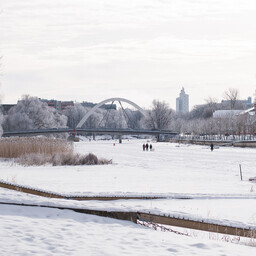
Talvel on Emajõel tekkinud
paks jääkiht
, mõnes kohas kuni 30 cm. Paljud inimesed on läinud jääle jalutama. Viimased soojemad päevad on muutnud jää ohtlikuks. Päästeamet hoiatab: jääle ei tohiks minna, eriti sildade ja truupide lähedal.
paks jääkiht
Tõlge fraasile: paks jääkiht
EN
thick layer of ice
Päästeameti juhataja Arvi Uustalu ütleb, et Emajõe kaldal on kohti, kus jää on paks, aga ka kohti, kus
jää on õhuke ja ohtlik
. Jää all võib olla vett, mida ei näe. Kui jää läbi murdub, võib vool inimest alla tõmmata. Päästeametil on raske kedagi päästa.
jää on õhuke ja ohtlik
Tõlge fraasile: jää on õhuke ja ohtlik
EN
the ice is thin and dangerous
Kolmapäeval kukkus üks päästeameti töötaja läbi jää. Tal oli
turvavarustus
, aga vool tiris teda ikkagi. Tema ütles, et oli raske veest välja tulla. Emajõel on vooluga kohtades eriti ohtlik.
turvavarustus
Tõlge fraasile: turvavarustus
EN
safety equipment
Keskkonnaagentuur mõõdab jää paksust. Näiteks Kvissentalis on jää 27 cm paks, kesklinnas 35 cm. Agentuuri töötaja Tanel Toots ütleb, et sildade ja truupide ümbrus on ohtlik. Inimesed peaksid ise vaatama, kas jää on turvaline.
Tartu abilinnapea Priit Humal ütleb, et linn jälgib jää olukorda koos päästeametiga. Neljapäeval pannakse üles
hoiatusildid
jää ohtlikkus
e kohta. Praegu ei keelata jääle minekut, sest selleks pole piisavalt ressurssi. Kui olud halvenevad, võib keelu kaaluda.
hoiatusildid
Tõlge fraasile: hoiatusildid
EN
warning signs
jää ohtlikkus
Tõlge fraasile: jää ohtlikkus
EN
danger of ice
Toots lisab, et kui
jää hakkab sulama
, muutub see kiiresti ohtlikuks. Mõne päevaga võib jää täiesti kaduda. Seda tuleb meeles pidada.
jää hakkab sulama
Tõlge fraasile: jää hakkab sulama
EN
the ice starts to melt
This winter, a thick layer of ice has formed on Emajõgi, up to 30 cm in some places. Many people have gone walking on the ice. Recent warmer days have made the ice dangerous. The Rescue Board warns: one should not go on the ice, especially near bridges and piers.
The head of the Rescue Board, Arvi Uustalu, says that there are places along Emajõgi where the ice is thick, but also places where it is thin and dangerous. There may be water under the ice that is not visible. If the ice breaks, the current can pull a person under. It is difficult for the Rescue Board to save anyone.
On Wednesday, one Rescue Board employee fell through the ice. He had safety equipment, but the current still pulled him. He said it was difficult to get out of the water. Emajõgi is especially dangerous in areas with strong currents.
The Environmental Agency measures ice thickness. For example, in Kvissental, the ice is 27 cm thick, and in the city center, it is 35 cm. Agency employee Tanel Toots says that the areas around bridges and piers are dangerous. People should check for themselves whether the ice is safe.
Tartu deputy mayor Priit Humal says that the city is monitoring the ice situation together with the Rescue Board. On Thursday, warning signs about the danger of the ice will be put up. Currently, going on the ice is not prohibited, as there are not enough resources for enforcement. If conditions worsen, a ban may be considered.
Toots adds that when the ice starts to melt, it quickly becomes dangerous. The ice can disappear completely within a few days. This should be kept in mind.