
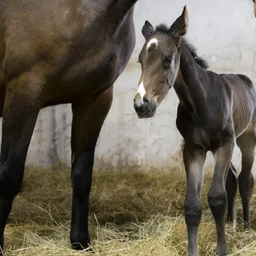
In mid-April, a cloned foal was born at the Luunja stable by veterinary scientists from the Estonian University of Life Sciences. This makes Estonia the second country in Europe where horses are cloned.
The foal is in good health and living a normal life. It can go outside with its mother, but only for short periods initially to avoid catching a cold.
This foal is not ordinary. It is a genetic copy of the former competition horse Wodan M. It took four years before cloning to develop the right method.
The ICSI method was used, where a single sperm is injected into an egg. The embryo was then grown in a laboratory and transferred to the mother. In the summer of 2024, the first cloned foal Endex was born.
Cloning helps preserve endangered horse breeds and create copies of valuable horses. It is also useful when a top horse dies, but its genetics remain.
In Estonia, it is now possible to produce both test-tube foals and clones. This is a major advancement in horse breeding. In Europe, this is currently only done in Italy.
Cloning is a complex and expensive process. It requires a specialized laboratory and experienced scientists. Estonia now has such a center at the Luunja stable.
Estonian scientists hope the country will become an important reproductive biotechnology hub. This would also benefit other Baltic and Scandinavian countries.
The cloned foal Endex is now healthy and strong. Scientists are monitoring whether it will become as good a competition horse as its predecessor Wodan M.