
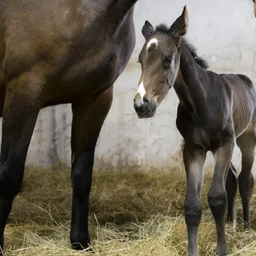
Aprilli keskel sündis Luunja tallis Eesti Maaülikooli veterinaarteadlaste kloonitud varss. See teeb Eesti teiseks riigiks Euroopas, kus hobuseid kloonitakse.
Varss on hea tervise juures ja elab tavalist elu. Ta saab emaga õues käia, kuid alguses ainult lühikest aega, et ta ei külmetaks.
See varss ei ole tavaline. Ta on
geneetiline koopia
endisest võistlushobusest Wodan M-ist. Enne kloonimist kulus neli aastat, et õige meetod välja töötada.
geneetiline koopia
Tõlge fraasile: geneetiline koopia
EN
genetic copy
Kasutati meetodit nimega ICSI, kus üks sperm rakku süstitakse. Seejärel kasvatati embrüot laboris ja siirdati emale. 2024. aasta suvel sündis
esimene kloonvars
Endex.
esimene kloonvars
Tõlge fraasile: esimene kloonvars
EN
first cloned foal
Kloonimine aitab
säilitada ohustatud hobusetõuge
ja luua koopiaid väärtuslikest hobustest. See on kasulik ka siis, kui tipphobune sureb, kuid tema geneetika jääb alles.
säilitada ohustatud hobusetõuge
Tõlge fraasile: säilitada ohustatud hobusetõuge
EN
preserve endangered horse breeds
Eestis on nüüd võimalik teha nii
katseklaasivars
eid kui ka kloone. See on
suur edusamm hobusekasvatuses
. Euroopas tehakse seda veel ainult Itaalias.
katseklaasivars
Tõlge fraasile: katseklaasivars
EN
test-tube foal
suur edusamm hobusekasvatuses
Tõlge fraasile: suur edusamm hobusekasvatuses
EN
major advancement in horse breeding
Kloonimine on
keeruline ja kallis protsess
. Selleks on vaja spetsiaalset laborit ja kogenud teadlasi. Eestis on nüüd selline keskus Luunja talli juures.
keeruline ja kallis protsess
Tõlge fraasile: keeruline ja kallis protsess
EN
complex and expensive process
Eesti teadlased loodavad, et riigist saab tähtis
reproduktiivbiotehnoloogia keskus
. See aitaks ka teistel Baltimaadel ja Skandinaaviamaal.
reproduktiivbiotehnoloogia keskus
Tõlge fraasile: reproduktiivbiotehnoloogia keskus
EN
reproductive biotechnology center
Kloonvars Endex on nüüd
terve ja tugev
. Teadlased
jälgivad, kas ta saab sama heaks võistlushobuseks
kui tema eelkäija Wodan M.
terve ja tugev
Tõlge fraasile: terve ja tugev
EN
healthy and strong
jälgivad, kas ta saab sama heaks võistlushobuseks
Tõlge fraasile: jälgivad, kas ta saab sama heaks võistlushobuseks
EN
monitoring whether he will become as good a competition horse
In mid-April, a cloned foal was born at the Luunja stable by veterinary scientists from the Estonian University of Life Sciences. This makes Estonia the second country in Europe where horses are cloned.
The foal is in good health and living a normal life. It can go outside with its mother, but only for short periods initially to avoid catching a cold.
This foal is not ordinary. It is a genetic copy of the former competition horse Wodan M. It took four years before cloning to develop the right method.
The ICSI method was used, where a single sperm is injected into an egg. The embryo was then grown in a laboratory and transferred to the mother. In the summer of 2024, the first cloned foal Endex was born.
Cloning helps preserve endangered horse breeds and create copies of valuable horses. It is also useful when a top horse dies, but its genetics remain.
In Estonia, it is now possible to produce both test-tube foals and clones. This is a major advancement in horse breeding. In Europe, this is currently only done in Italy.
Cloning is a complex and expensive process. It requires a specialized laboratory and experienced scientists. Estonia now has such a center at the Luunja stable.
Estonian scientists hope the country will become an important reproductive biotechnology hub. This would also benefit other Baltic and Scandinavian countries.
The cloned foal Endex is now healthy and strong. Scientists are monitoring whether it will become as good a competition horse as its predecessor Wodan M.