
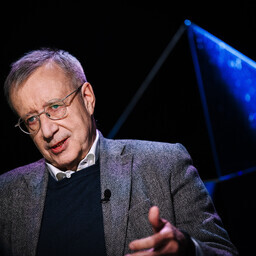
President Toomas Hendrik Ilves ütles ERR-ile antud intervjuus, et Euroopa liidrid pole aru saanud suhete muutumisest USA-ga. Euroopa Liit vajab tema sõnul suuri muutusi, et
luua iseseisev kaitse
USA-st sõltumata.
luua iseseisev kaitse
Tõlge fraasile: luua iseseisev kaitse
EN
create independent defense
Viimastel nädalatel on toimunud konfliktid Gröönimaa ümber. Kas
me võime veel loota Ameerikale
, kes on olnud NATO põhitagaja? Ilves usub, et Euroopal on palju tegemata tööd. Euroopa pole keskendunud oma kaitsele juba 35 aastat.
me võime veel loota Ameerikale
Tõlge fraasile: me võime veel loota Ameerikale
EN
we can still rely on America
Külma sõja ajal Lääne-Euroopa kulutas kaitsele umbes neli protsenti SKP-st. Eesti on praegu samal tasemel. Me oleme elanud rahudividendi illusioonis – idee, mille George Bush vanem tõi. Külma sõja lõpus sai kasutada kaitsevahendeid mujal, kuid USA jäi globaalse julgeoleku tagajaks.
Praegu on meil
alaarenenud kaitse
ja sõltume USA-st. Ilves märgib, et USA on takistanud Euroopa autonoomse kaitse arendamist. Suur välispoliitiline lahing oli 1998, kui Euroopa Liit võttis vastu Saint-Malo deklaratsiooni. See pani aluse Euroopa Liidu ühisele julgeoleku- ja kaitsepoliitikale.
alaarenenud kaitse
Tõlge fraasile: alaarenenud kaitse
EN
underdeveloped defense
Praegu on USA uus juhtkond Euroopa-vastane. USA rahvusliku julgeolekustrateegia järgi on Euroopa põhiline oponent. Ilves leiab, et Euroopa pole seda kriitikat tõsiselt võtnud.
NATO peasekretär Mark Rutte ütleb, et kõik on korras. Aga Gröönimaa ja Taani välisministrid olid pärast kohtumist USA asepresidendiga süngete nägudega. See näitab, et me pole tõsiselt võtnud Euroopa-USA suhete muutusi.
Euroopa peab tegema suuri reforme
. Pole piisav ainult suure kaitseväe ülesehitamine. Vaja on muuta Euroopa Liidu struktuure. Võib-olla peaks olema julgeolekunõukogu, nagu USA-s.
Euroopa peab tegema suuri reforme
Tõlge fraasile: Euroopa peab tegema suuri reforme
EN
Europe must make major reforms
Euroopa Liidu kohta öeldakse, et tegemist on rahuprojektiga. Kaitse jäetakse NATO kanda. Kas otsustav muutus Euroopa Liidus oleks vajalik? Praegu pole võimalik lisada operatiivset kaitsekoostööd.
Meil on vaja teha reforme, nagu ühine kapitaliturg. See võimaldaks investeeringuid kõrgtehnoloogiasse. Me
sõltume Ameerika tehnoloogiast
. Kõik, mida kasutame kõrgtehnoloogias, tuleb Ameerikast.
sõltume Ameerika tehnoloogiast
Tõlge fraasile: sõltume Ameerika tehnoloogiast
EN
we depend on American technology
Teiseks peame ühine laenuvõtmise vastuseisu ületama. Mõned liikmesriigid on olnud sellele vastu aastakümneid. Euroopa Liit võttis koroonakriisi ajal ja Ukraina abistamiseks suuri laene.
Venemaa küljes olevad pisiriigid on keerulises olukorras. Euroopas pole garantiid, et Trumpi sarnased juhtid ei tuleks võimule. Me ei tea, kelle poole vaadata.
Slovakkia ja Tšehhi võivad järgida Ungari eeskuju. Me oleme keerulises olukorras, aga peame sellega tegelema. Halada pole mõtet.
Ilves soovib kasutada Euroopa Liidu artiklit 7 riikide puhul nagu Ungari, kes liiguvad autoritaarsuse poole. Euroopa riigid peaksid kokku võtma ja muutuma otsuseid kvalifitseeritud häälteenamuse alusel.
Praegu kasutavad Euroopa riigid USA suhtes laveerimisdiplomaatiat. Lootus on, et ameeriklased unustavad ebameeldivad asjad ära. Kas see on jätkusuutlik? See muutus USA-s ei ole seotud ainult Donald Trumpiga.
Lääne-Euroopa riigid pole pidanud tegelema suurte ebameeldivustega. Riigid, kes paremini mõistavad Venemaad, on valmis astma julgemaid samme.
NATO peasekretär Rutte ütleb, et kõik on korras, kuigi igaüks näeb, et see pole tõsi. Ka Ursula von der Leyen ei ole julge olnud.
Euroopa peab leppima uue olukorraga ja teha asju teisiti. Kiiremini see juhtub, seda parem Euroopale endale. Me ei luba USA-l kasutada võtteid Euroopa vastu.
Hea näide otsekohesusest
on EL-i välispoliitika kõrge esindaja Kaja Kallas. Tema julgust vajaksid ka teised Euroopa liidrid. Kallas on esimene, kes julgeb asju välja öelda.
Hea näide otsekohesusest
Tõlge fraasile: Hea näide otsekohesusest
EN
A good example of directness
Euroopa liidrite suhtes pole erilist optimismi. Viimasel ajal räägitakse, et Euroopa Liidul peaks olema eriesindaja Vladimir Putini suhtlemiseks. See oleks valesamm ja kahjustaks Kaja Kallase positsiooni.
See ettepanek tuleneb frustratsioonist, eriti Prantsusmaal, et suurriigid ei saa välispoliitikat juhtida nii nagu varem.
President Toomas Hendrik Ilves said in an interview with ERR that European leaders have not understood the changing relationship with the USA. The European Union, according to him, needs major changes to build an independent defense independent of the USA.
In recent weeks, conflicts have erupted over Greenland. Can we still rely on America, which has been the backbone of NATO? Ilves believes that Europe has much unfinished work. Europe has not focused on its defense for 35 years.
During the Cold War, Western Europe spent about four percent of GDP on defense. Estonia is now at the same level. We have lived in the illusion of the peace dividend – an idea introduced by George H.W. Bush. At the end of the Cold War, defense resources could be used elsewhere, but the USA remained the guarantor of global security.
Today, we have underdeveloped defense and are dependent on the USA. Ilves notes that the USA has hindered the development of autonomous defense in Europe. A major foreign policy battle took place in 1998 when the European Union adopted the Saint-Malo declaration. This laid the foundation for the EU's common security and defense policy.
Now, the new leadership in the USA is anti-European. According to the US national security strategy, Europe is the primary opponent. Ilves believes that Europe has not taken this criticism seriously.
NATO Secretary General Mark Rutte says everything is fine. But the foreign ministers of Greenland and Denmark had gloomy faces after meeting with the US vice president. This shows that we have not seriously considered the changes in US-European relations.
Europe must undertake major reforms. Building a large defense force alone is not enough. The structures of the European Union need to be changed. Perhaps there should be a security council, similar to the one in the USA.
The European Union is often called a peace project. Defense is left to NATO. Would a decisive change in the EU be necessary? It is currently not possible to add operational defense cooperation.
We need reforms, such as a unified capital market. This would allow investments in high technology. We depend on American technology. Everything we use in high technology comes from America.
Secondly, we must overcome opposition to joint borrowing. Some member states have opposed this for decades. The European Union took on large loans during the COVID-19 crisis and to support Ukraine.
The small states bordering Russia are in a difficult situation. In Europe, there is no guarantee that leaders like Trump will not come to power. We do not know who to turn to.
Slovakia and the Czech Republic may follow Hungary's example. We are in a difficult situation, but we have to deal with it. Complaining is pointless.
Ilves wishes to use Article 7 of the European Union for countries like Hungary that are moving towards authoritarianism. European countries should come together and make decisions based on qualified majority voting.
Currently, European countries are practicing hedging diplomacy with the USA. The hope is that the Americans will forget unpleasant things. Is this sustainable? This change in the USA is not only related to Donald Trump.
Western European countries have not had to deal with major unpleasantries. Countries that better understand Russia are ready to take bolder steps.
NATO Secretary General Rutte says everything is fine, even though everyone sees that this is not true. Even Ursula von der Leyen has not been brave.
Europe must accept the new situation and do things differently. The sooner this happens, the better for Europe itself. We will not allow the USA to use tactics against Europe.
A good example of straightforwardness is the EU's High Representative for Foreign Affairs, Kaja Kallas. Other European leaders also need her courage. Kallas is the first to dare to speak out.
There is no particular optimism regarding European leaders. Recently, there has been talk that the European Union should have a special representative to communicate with Vladimir Putin. This would be a misstep and harm Kaja Kallas's position.
This proposal stems from frustration, especially in France, that major powers cannot lead foreign policy as they used to.