
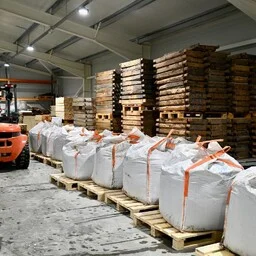
Geologists studied Estonian phosphorite. They found that phosphoric acid and rare metals can be produced from it. However, world market prices are currently too low, making mining unprofitable.
The European Union purchases a lot of phosphorus, most of it from Morocco and Russia. Estonia has nearly 3 billion tons of phosphorite. The studies were mainly conducted in the Toolse deposit.
The Toolse deposit is near the sea. The phosphorite layer there is thin, making mining easier but yielding less phosphorite. The quality of the phosphorite must be good for mining to be worthwhile.
Estonian phosphorite is pure. However, on the international market, phosphorite needs to be further enriched. Moroccan phosphorite does not require as much enrichment, making Estonian phosphorite more expensive.
Geologists also tried to find rare metals. They obtained a substance with a 1% metal content, but processing it would be too expensive, making it currently unprofitable.
The entire process would be very costly. The price of phosphoric acid would need to rise for it to be worthwhile. It would also have a significant environmental impact. Groundwater levels could drop by up to 32 meters.
In cities and villages, the impact would be smaller. In Rakvere, water levels would drop by 1-4 meters. People would not feel it much, but wells would need to be dug deeper.
The biggest problem is waste. Phosphogypsum cannot simply be left in nature. New solutions are needed for its processing. Scientists are looking for ways to utilize it better.
The study cost €5 million, but it provided precise data. We now know that phosphorite processing is possible, but it is currently not economically viable.
The phosphorite remains underground, waiting. Perhaps in the future, it will become useful. Geologists continue their research, seeking ways to benefit from Estonia’s mineral resources.