
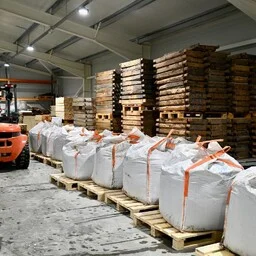
Geoloogid uurisid Eesti fosforiiti. Nad leidsid, et sellest saab teha fosforhapet ja haruldasi metalle. Aga praegu on maailmaturu hinnad liiga madalad. Seega pole kaevandamine kasumlik.
Euroopa Liit ostab palju fosforit
. Enamik tuleb Marokost ja Venemaalt.
Eestis on ligi 3 miljardit tonni fosforiiti
. Uuringud tehti peamiselt Toolse maardlas.
Euroopa Liit ostab palju fosforit
Tõlge fraasile: Euroopa Liit ostab palju fosforit
EN
The European Union buys a lot of phosphorus
Eestis on ligi 3 miljardit tonni fosforiiti
Tõlge fraasile: Eestis on ligi 3 miljardit tonni fosforiiti
EN
Estonia has nearly 3 billion tons of phosphorite
Toolse maardla on mere lähedal
. Seal on fosforiidikiht õhuke. See tähendab, et kaevandamine oleks lihtsam, kuid fosforiiti oleks vähem.
Fosforiidi kvaliteet peab olema hea, et kaevandamine tasuks ära
.
Toolse maardla on mere lähedal
Tõlge fraasile: Toolse maardla on mere lähedal
EN
The Toolse deposit is near the sea
Fosforiidi kvaliteet peab olema hea, et kaevandamine tasuks ära
Tõlge fraasile: Fosforiidi kvaliteet peab olema hea, et kaevandamine tasuks ära
EN
The quality of phosphorite must be good for mining to be profitable
Eesti fosforiit on puhas
. Aga rahvusvahelisel turul peab fosforiit olema veel rikastatud. Maroko fosforiiti ei pea nii palju rikastama. See teeb Eesti fosforiidi kallimaks.
Eesti fosforiit on puhas
Tõlge fraasile: Eesti fosforiit on puhas
EN
Estonian phosphorite is pure
Geoloogid proovisid ka haruldasi metalle leida. Nad said 1% metallide sisaldusega aine. Aga selle töötlemine oleks liiga kallis. Seega ei ole see praegu kasulik.
Kogu protsess oleks väga kallis.
Fosforhappe hind peaks tõusma, et see tasuks ära
. Samuti oleks suur mõju keskkonnale. Põhjavesi võib langeda kuni 32 meetrit.
Fosforhappe hind peaks tõusma, et see tasuks ära
Tõlge fraasile: Fosforhappe hind peaks tõusma, et see tasuks ära
EN
The price of phosphoric acid should rise to make it profitable
Linnades ja külades oleks mõju väiksem. Rakveres langeks vesi 1-4 meetrit. Inimesed ei tunneks seda palju. Kaevud tuleks teha sügavamale.
Suur probleem on jäätmed
.
Fosfokipsi ei saa lihtsalt loodusesse jätta
. Selle töötlemiseks on vaja uusi lahendusi. Teadlased otsivad viise, kuidas seda paremini kasutada.
Suur probleem on jäätmed
Tõlge fraasile: Suur probleem on jäätmed
EN
A big problem is waste
Fosfokipsi ei saa lihtsalt loodusesse jätta
Tõlge fraasile: Fosfokipsi ei saa lihtsalt loodusesse jätta
EN
Phosphogypsum cannot simply be left in nature
Uuring maksis 5 miljonit eurot
. Aga see andis täpsed andmed. Nüüd teame, et fosforiidi töötlemine on võimalik. Aga praegu pole see majanduslikult tasuv.
Uuring maksis 5 miljonit eurot
Tõlge fraasile: Uuring maksis 5 miljonit eurot
EN
The study cost 5 million euros
Fosforiit jääb maa alla ootama. Võib-olla tulevikus muutub see kasulikuks.
Geoloogid jätkavad uuringuid
.
Nad otsivad viise, kuidas Eesti maavaradest kasu saada
.
Geoloogid jätkavad uuringuid
Tõlge fraasile: Geoloogid jätkavad uuringuid
EN
Geologists continue research
Nad otsivad viise, kuidas Eesti maavaradest kasu saada
Tõlge fraasile: Nad otsivad viise, kuidas Eesti maavaradest kasu saada
EN
They are looking for ways to benefit from Estonia's mineral resources
Geologists studied Estonian phosphorite. They found that phosphoric acid and rare metals can be produced from it. However, world market prices are currently too low, making mining unprofitable.
The European Union purchases a lot of phosphorus, most of it from Morocco and Russia. Estonia has nearly 3 billion tons of phosphorite. The studies were mainly conducted in the Toolse deposit.
The Toolse deposit is near the sea. The phosphorite layer there is thin, making mining easier but yielding less phosphorite. The quality of the phosphorite must be good for mining to be worthwhile.
Estonian phosphorite is pure. However, on the international market, phosphorite needs to be further enriched. Moroccan phosphorite does not require as much enrichment, making Estonian phosphorite more expensive.
Geologists also tried to find rare metals. They obtained a substance with a 1% metal content, but processing it would be too expensive, making it currently unprofitable.
The entire process would be very costly. The price of phosphoric acid would need to rise for it to be worthwhile. It would also have a significant environmental impact. Groundwater levels could drop by up to 32 meters.
In cities and villages, the impact would be smaller. In Rakvere, water levels would drop by 1-4 meters. People would not feel it much, but wells would need to be dug deeper.
The biggest problem is waste. Phosphogypsum cannot simply be left in nature. New solutions are needed for its processing. Scientists are looking for ways to utilize it better.
The study cost €5 million, but it provided precise data. We now know that phosphorite processing is possible, but it is currently not economically viable.
The phosphorite remains underground, waiting. Perhaps in the future, it will become useful. Geologists continue their research, seeking ways to benefit from Estonia’s mineral resources.