
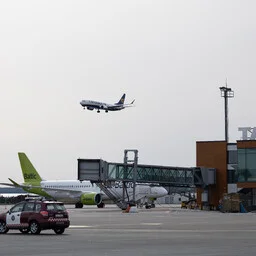
In recent years, Russia has caused more GPS interferences in the Baltic Sea region. Ukrainian drones have attacked Russian ports.
The head of flight safety at the Finnish Transport Agency, Raine Luojus, said that the interferences have not created hazardous situations in aviation. The interferences reach Finland's largest airport.
Tallinn Airport is not affected by the interferences. Air traffic controller Mariliis Õun said that the interferences remain at low altitudes 'behind the Earth's curvature'. They do not reach Tallinn Airport.
In Estonia, TTJA compiles statistics on GPS interferences. Bureau chief Erko Kulu stated that no significant increase in interferences has been observed in recent weeks. Flying is safe because other navigation tools are used.
Õun added that GPS interferences are daily occurrences, but flying has not become dangerous. Air traffic controllers and pilots have adapted to the situation.
The Finnish Border Guard has warned ship passengers due to GPS interferences. The interferences are stronger in the Gulf of Finland. Warmer water helps the interferences spread further.
In the entire Baltic Sea region, there are two major areas from which the interferences originate: Kaliningrad and St. Petersburg. There is a no-fly zone near the eastern border.
Air traffic controllers assist pilots. GPS interferences do not affect the work of air traffic controllers. Flights are safe.
GPS is widely used, but aircraft also employ other navigation tools. Many aircraft use GPS as part of their systems. Interferences may also affect other systems.
In Estonia, the radio navigation network is limited. Many aircraft rely on GPS or more complex systems. Smaller aircraft are more vulnerable.
Tallinn Airport's air traffic is not currently heavy. GPS interferences do not cause serious problems there.