
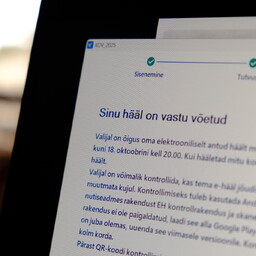
The State Electoral Service checks the data of the e-voting box. They ensure that all data is correct. For example, if someone votes multiple times, only the last vote remains. If someone votes by paper, the e-vote is canceled.
The Electoral Service conducts an audit for each election. The auditor checks whether all votes counted by computers are the same as those sent by voters. Starting from 2024, the Electoral Service will collaborate with scientists from Tallinn University of Technology. They want the auditing process to be clearer and more automated.
Tallinn University of Technology scientist Tarvo Treier studied the system. For testing purposes, he created election boxes with errors. Treier wanted to see if auditors could detect these errors. He introduced 37 different errors, but auditors found only 5.
For example, an error where a „ghost vote“ was added to the election box was not detected. Similarly, it was not noticed if someone changed their vote by paper after e-voting. Treier said his study does not mean that e-elections are insecure. He simply showed how auditing can be improved.
Arne Koitmäe, head of the Electoral Service, said e-elections are secure. E-elections have been in use for 20 years and have been thoroughly tested. Koitmäe emphasized that Treier did not find security holes. He only suggested ways to automate auditing.
The Electoral Service is currently developing new software. It will allow auditors to independently check e-votes. This will make auditing easier and clearer. The system may be introduced in the next elections.