
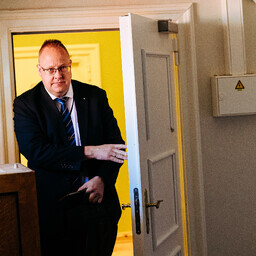
Kaupo Rosin, välisluureameti peadirektor, ütles ERR-ile, et
Venemaal ei ole praegu plaane rünnata Balti riike või NATO-t
. Eesti ülesanne on hoida olukorda sellisena.
Venemaal ei ole praegu plaane rünnata Balti riike või NATO-t
Tõlge fraasile: Venemaal ei ole praegu plaane rünnata Balti riike või NATO-t
EN
Russia currently has no plans to attack the Baltic states or NATO
Venemaa püüab pidurdada Euroopa relvastumist
. Nad räägivad rahust ja väidavad, et relvastumine võtab raha ära teistest valdkondadest, näiteks sotsiaalvaldkonnast.
Venemaa püüab pidurdada Euroopa relvastumist
Tõlge fraasile: Venemaa püüab pidurdada Euroopa relvastumist
EN
Russia seeks to curb European armament
Rosin ütles, et Venemaa on muutnud oma käitumist pärast NATO reaktsioone. Näiteks droonide sisselennud NATO õhruumi on vähenenud.
Läänemere kohal lendavad vene lennukid nüüd väga täpselt. Nad jälgivad oma lennutrajektoore hoolega, et vältida intsidente.
Kaablilõhkumised Läänemerel ei ole pärast NATO missiooni juhtunud
. See ei tähenda, et tulevikus intsidente ei või toimuda.
Kaablilõhkumised Läänemerel ei ole pärast NATO missiooni juhtunud
Tõlge fraasile: Kaablilõhkumised Läänemerel ei ole pärast NATO missiooni juhtunud
EN
Cable disruptions in the Baltic Sea have not occurred since the NATO mission
Rosin ütles, et
Venemaa püüab säilitada liikumisvabadust Läänemerel
. Naftavedud Läänemere kaudu on Venemaale olulised.
Venemaa püüab säilitada liikumisvabadust Läänemerel
Tõlge fraasile: Venemaa püüab säilitada liikumisvabadust Läänemerel
EN
Russia seeks to maintain freedom of movement in the Baltic Sea
Prantslased tegid hiljuti operatsiooni, kus nad pardusid vene varilaevastiku tankerile. See näitab, et varilaevastik ei ole täiesti puutumatu.
Eestit puudutasid kaheks häirivad intsidendid
. Üks oli vene lennuki sisselend Eesti õhuruumi 12 minutiks. Teine oli Saatse saapa juhtum.
Eestit puudutasid kaheks häirivad intsidendid
Tõlge fraasile: Eestit puudutasid kaheks häirivad intsidendid
EN
Estonia was affected by two disturbing incidents
Venemaa korraldas suuri sisekaitseõppusi
Eesti, Läti ja Soome piiril. Need õppused olid seotud Ukrainas toimuvaga.
Venemaa korraldas suuri sisekaitseõppusi
Tõlge fraasile: Venemaa korraldas suuri sisekaitseõppusi
EN
Russia conducted large internal defense exercises
Venemaa värvas ka mitu inimest Eestist
. See näitab aktiivsust Eesti territooriumil.
Venemaa värvas ka mitu inimest Eestist
Tõlge fraasile: Venemaa värvas ka mitu inimest Eestist
EN
Russia also recruited several people from Estonia
Rosin ütles, et
sabotaazitegevus toimub Venemaa juhtkonna teadmisel
. See on suunatud Ukraina toetuse õõnestamisele.
sabotaazitegevus toimub Venemaa juhtkonna teadmisel
Tõlge fraasile: sabotaazitegevus toimub Venemaa juhtkonna teadmisel
EN
Sabotage activities occur with the knowledge of Russian leadership
Hübriidrünnakute mõiste ei ole täpne
. Parem on kasutada konkreetseid termineid, nagu sabotaaz või küberrünne.
Hübriidrünnakute mõiste ei ole täpne
Tõlge fraasile: Hübriidrünnakute mõiste ei ole täpne
EN
The concept of hybrid attacks is not precise
Venemaa püüab takistada Euroopa relvastumist. Nad räägivad rahust, kuid samas mõjutavad poliitilisi parteisid ja rahvastikugruppe.
Kui Ukraina sõda lõpeb, võib Venemaa muutuda enesekindlamaks. See võib tõsta riske Eestile.
Venemaa majandus on sanktsioonide mõjul raskustes
. Näiteks nafta hind on langenud ja sissetulekud on vähenenud.
Venemaa majandus on sanktsioonide mõjul raskustes
Tõlge fraasile: Venemaa majandus on sanktsioonide mõjul raskustes
EN
The Russian economy is struggling due to sanctions
Venemaa ühiskond muutub sõjaühiskonnaks. Veteranidel ja haavatutel on mõju kohalikul tasandil.
Eesti peab investeerima oma kaitsesse, et hoida olukorda stabiilsena. NATO ja Euroopa Liit peavad tegema sama.
Kaupo Rosin, Director General of the Foreign Intelligence Service, told ERR that Russia currently has no plans to attack the Baltic states or NATO. Estonia's task is to keep the situation as it is.
Russia is trying to halt Europe's militarization. They talk about peace and claim that militarization takes money away from other sectors, such as social services.
Rosin said that Russia has changed its behavior following NATO's reactions. For example, drone incursions into NATO airspace have decreased.
Russian aircraft over the Baltic Sea now fly very precisely. They carefully monitor their flight trajectories to avoid incidents.
There have been no cable disruptions in the Baltic Sea since the NATO mission. This does not mean that incidents cannot occur in the future.
Rosin said that Russia aims to maintain freedom of movement in the Baltic Sea. Oil shipments through the Baltic Sea are important to Russia.
The French recently conducted an operation where they boarded a Russian shadow fleet tanker. This shows that the shadow fleet is not completely untouchable.
Estonia was affected by two disruptive incidents. One was a Russian aircraft's incursion into Estonian airspace for 12 minutes. The other was the Saatse Boot incident.
Russia conducted large internal defense exercises near the borders of Estonia, Latvia, and Finland. These exercises were related to events in Ukraine.
Russia also recruited several people from Estonia. This shows activity on Estonian territory.
Rosin said that sabotage activities are conducted with the knowledge of Russia's leadership. These are aimed at undermining support for Ukraine.
The concept of hybrid attacks is not precise. It is better to use specific terms such as sabotage or cyberattacks.
Russia is trying to hinder Europe's militarization. They talk about peace, but at the same time, they influence political parties and population groups.
When the war in Ukraine ends, Russia may become more self-confident. This could increase risks for Estonia.
Russia's economy is struggling due to sanctions. For example, oil prices have fallen and revenues have decreased.
Russian society is turning into a war society. Veterans and the vulnerable have influence at the local level.
Estonia must invest in its defense to keep the situation stable. NATO and the European Union must do the same.