
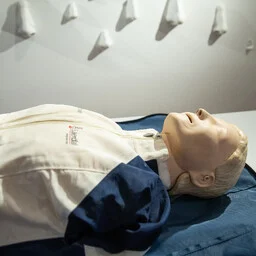
In Estonia, people learn first aid in driving school or at work. But many have outdated knowledge. People are afraid to use resuscitation devices available in public places.
Junior researcher Katre Tombu says that an ordinary person doesn't need to know why their stomach hurts. But they need to understand whether a person needs urgent help or not. First aid is taught in training courses. The Estonian health development plan states that everyone should know how to provide first aid.
The problem is that training doesn't reach everyone. The quality of training varies. First aid guidelines are updated every five years. If someone took a training course 15 years ago, that knowledge is outdated.
In her work, Tombu researches how people understand first aid. She studies ambulance records, conducts interviews, and surveys. Her goal is to find out what people need from training courses.
Tombu believes that if people perform resuscitation techniques, mortality is lower. She wants to know if only chest compressions or chest compressions combined with breathing are better. New guidelines recommend both.
Another question is whether people know how to use AED devices. Unfortunately, they are rarely used. People don't know where they are, how to use them, or think they are only for doctors.
Tombu recommends that people learn to recognize clinical death. It's important to check if a person is conscious and breathing normally. If breathing is abnormal, help should be called immediately.
If you see someone feeling bad, ask if everything is okay. If the person says they feel bad or lose consciousness, call 112 and look for an AED device. They are available in many public places, but their locations are not mapped.
If a person is unconscious, call 112 immediately. The dispatcher will tell you what to do. If the person needs chest compressions, put the phone on speaker and listen to instructions. Hands should be placed in the center of the chest and compressions should be done at a rate of 100-120 times per minute.
When the AED arrives, continue compressions until the device is in place. The AED will guide you on what to do. If a shock is needed, the device will deliver it. Make sure no one is touching the person.
If you are in a public place, call others for help. Performing chest compressions is hard, so you can take turns. Hands should be straight so the force is sufficient.
Tombu believes that every person can help. The crucial thing is the courage to act. AED devices are easy to use and available to everyone.