
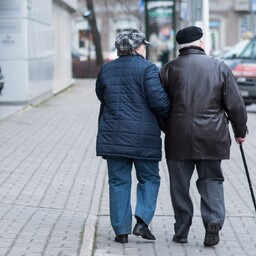
The common belief is that the elderly do not use smart devices. In reality, an older person can simultaneously engage with TV, phone, and radio information fields. It is important to be critical of information.
Maia Klaassen says that people know how to search for information. The problem lies in the large amount of information. Many channels make it difficult to find important information. Klaassen says, "If you don’t know what your local government is doing, ask yourself where you searched for information."
An older person can sit in front of the TV, phone in hand, with radio in the background. This can lead to fatigue and information manipulation. According to Eurobarometer data, it is difficult to identify fake news. Sirle Salmistu says that printed information may not necessarily be true.
Klaassen talks about doomscrolling, where a person endlessly scrolls through information on the screen. This does not only affect young people. An older person can also spend hours on Facebook to stay connected with the world. Klaassen says, "Screen time is not the same. It’s important to do useful things."
Improving the digital competence of the elderly is not just about remembering buttons. It is important to understand the logic of systems. Klaassen gives an example: "If a child teaches you to press the yellow button, it might later turn green."
In urban spaces, there are often few places to simply exist. There are many playgrounds for children, but free spaces for the elderly are scarce. Salmistu says that public spaces should offer more opportunities.
Klaassen agrees that local governments should provide more places where people can simply sit. She says, "Estonians love to quietly be among others."
Salmistu believes that the lack of benches is a big problem. They would give the elderly a resting place and an opportunity to socialize. She says, "Social relationships are very important for the elderly. The existence of meeting places is necessary."