
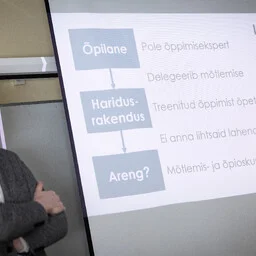
Õpilased ütlevad, et
TI-hüppe õpirakendus on tüütu, kuid sellel on palju potentsiaali
. Ivo Visak, programmi juht, rääkis ERR-ile, et noored näevad rakenduses võimalusi, kuid see vajab veel täiustamist.
TI-hüppe õpirakendus on tüütu, kuid sellel on palju potentsiaali
Tõlge fraasile: TI-hüppe õpirakendus on tüütu, kuid sellel on palju potentsiaali
EN
The TI-hüppe learning app is tedious, but it has a lot of potential
Ühiskonnas on kaks gruppi inimesi. Ühed usuvad, et
tehisaru aitab majandusel kasvada
. Teised arvavad, et see kahjustab kultuuri ja keskkonda. Visak ütleb, et
tehisaru on siin jäädavalt ja oluline on õpetada seda targalt kasutama
.
tehisaru aitab majandusel kasvada
Tõlge fraasile: tehisaru aitab majandusel kasvada
EN
artificial intelligence helps the economy grow
tehisaru on siin jäädavalt ja oluline on õpetada seda targalt kasutama
Tõlge fraasile: tehisaru on siin jäädavalt ja oluline on õpetada seda targalt kasutama
EN
artificial intelligence is here to stay and it's important to teach how to use it wisely
TI-hüppe peamine eesmärk on aidata õpetajaid
.
Eesti õpetajad on loomingulised, kuid vajavad abi tehisaru kasutamisel
. Programmil on partnerid nagu haridusministeerium ja haridusamet.
TI-hüppe peamine eesmärk on aidata õpetajaid
Tõlge fraasile: TI-hüppe peamine eesmärk on aidata õpetajaid
EN
The main goal of TI-hüppe is to help teachers
Eesti õpetajad on loomingulised, kuid vajavad abi tehisaru kasutamisel
Tõlge fraasile: Eesti õpetajad on loomingulised, kuid vajavad abi tehisaru kasutamisel
EN
Estonian teachers are creative but need help using artificial intelligence
Õpetajad arutavad õpilastega tehisaru kasutamist. Mõned õpilased ei kasuta seda üldse, teised kasutavad seda teadlikult. Visak ütleb, et
oluline on mõtestatud lähenemine, mitte ükskõiksus
.
oluline on mõtestatud lähenemine, mitte ükskõiksus
Tõlge fraasile: oluline on mõtestatud lähenemine, mitte ükskõiksus
EN
a thoughtful approach is important, not indifference
TI-hüpe pakub õpetajatele koolitusi ja materjale
. Näiteks saidil didaktika.tihuppe.ee on viie aine kohta abi. Õpetajad jagavad seal oma kogemusi.
TI-hüpe pakub õpetajatele koolitusi ja materjale
Tõlge fraasile: TI-hüpe pakub õpetajatele koolitusi ja materjale
EN
TI-hüppe offers training and materials for teachers
Õpirakendus ITI on erinev tavalisest tehisarust. See küsib palju küsimusi, et aidata õpilastel paremini mõista. Mõned õpilased leiavad seda tüütuks, kuid teistele see meeldib.
Visak ütleb, et
ITI-d kasutab iga nädal umbes 4000 õpilast
. Rakendus aitab neil õppida ja töödeks valmistuda. Kuid ta tahab, et see oleks rohkematele meeldiv.
ITI-d kasutab iga nädal umbes 4000 õpilast
Tõlge fraasile: ITI-d kasutab iga nädal umbes 4000 õpilast
EN
ITI is used by about 4000 students every week
Programm laieneb ka ametikoolidesse. Visak tahab aidata ka põhikooliõpetajaid, sest
paljud probleemid tekivad juba varakult
. Kommunikatsioon õpetajatega on oluline.
paljud probleemid tekivad juba varakult
Tõlge fraasile: paljud probleemid tekivad juba varakult
EN
many problems arise early on
TI-hüpe töötab teadlastega koos, et mõista rakenduse mõju. Jaan Aru uurimisrühm analüüsib, kuidas programm õpetajaid ja õpilasi mõjutab. Tulemused saavad valmis selle aasta lõpus.
Visak loodab, et
programm aitab õpetajaid ja õpilasi tulevikus veel rohkem
. Ta tahab, et
tehisaru oleks kasulik abivahend, mitte lihtsalt uus tehnoloogia
.
programm aitab õpetajaid ja õpilasi tulevikus veel rohkem
Tõlge fraasile: programm aitab õpetajaid ja õpilasi tulevikus veel rohkem
EN
the program will help teachers and students even more in the future
tehisaru oleks kasulik abivahend, mitte lihtsalt uus tehnoloogia
Tõlge fraasile: tehisaru oleks kasulik abivahend, mitte lihtsalt uus tehnoloogia
EN
artificial intelligence should be a useful tool, not just new technology
Students say that the TI-hüppe learning app is annoying but has a lot of potential. Ivo Visak, the program's leader, told ERR that young people see opportunities in the app, but it still needs improvement.
There are two groups of people in society. Some believe that artificial intelligence helps the economy grow. Others think it harms culture and the environment. Visak says that AI is here to stay, and it's important to teach how to use it wisely.
The main goal of TI-hüpe is to help teachers. Estonian teachers are creative but need assistance in using AI. The program has partners like the Ministry of Education and the Education Agency.
Teachers discuss the use of AI with students. Some students don't use it at all, while others use it consciously. Visak says that a thoughtful approach is important, not indifference.
TI-hüpe offers training and materials for teachers. For example, the website didaktika.tihuppe.ee provides help for five subjects. Teachers share their experiences there.
The learning app ITI is different from regular AI. It asks many questions to help students understand better. Some students find it annoying, but others like it.
Visak says that about 4,000 students use ITI every week. The app helps them learn and prepare for assignments. But he wants it to be more enjoyable for more people.
The program is expanding to vocational schools. Visak wants to help primary school teachers as well, as many problems arise early. Communication with teachers is crucial.
TI-hüpe works with scientists to understand the app's impact. Jaan Aru's research group analyzes how the program affects teachers and students. The results will be ready by the end of this year.
Visak hopes the program will help teachers and students even more in the future. He wants AI to be a useful tool, not just new technology.