
Martin Herem said that repelling drone attacks during peacetime would be very difficult. It would require many people and money. He believes that there should be 24-hour air defense units at the border. These units should consist of reservists.
Herem explained that repelling drones would also be technically challenging. Drones fly low and may not be visible on radar. The reaction time would be very short. Experience from Ukraine shows that a drone can be heard about 15 seconds before it arrives.
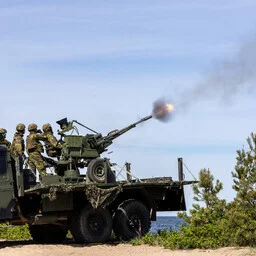
During wartime, the situation would be different. Then the border would be full of radars and weapons. Herem mentioned that Estonia already has many air defense weapons. For example, the CV90 armored vehicle is a good air defense weapon. We also have cannons and missiles.
But in peacetime, finding a solution is difficult. Herem said that maintaining constant surveillance at the border would be too expensive. The benefit would be minimal. He believes there is currently no need to fear an attack from Russia.
Herem suggested various reasons why the drone flew to the chimney of the Auvere power plant. It might have been a Ukrainian drone that got lost. Or the Russians used it as a provocation. Herem believes the drone carried explosives. However, it is not exactly known who sent the drone. The defense police are now investigating this.