
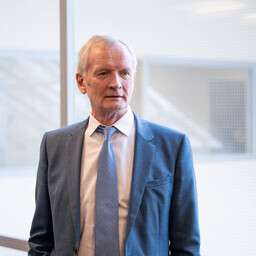
Tiit Land, rector of Tallinn University of Technology, said that the state has not paid the promised 40 million euros to universities. This money was agreed upon for four years. The agreement was for 130 million euros, but universities will receive only 90 million.
Land emphasized that this missing money is not additional funding. It is money that the state had already promised to universities earlier. In 2011-2012, higher education costs were frozen. Compared to today's prices, costs have risen. The average salary in 2010 was below 800 euros, now it is 1600 euros.
The bigger problem is that universities take on long-term obligations. Starting from 2027, higher education costs will be frozen again. At the same time, more young people are entering universities. Universities do not have the financial coverage for these obligations.
According to the state's strategy, 45% of people should obtain higher education. If more young people enroll, more money is needed. Land says that universities are not simply asking for additional funding, but their training needs are growing.
According to Land, universities are bothered by the labeling of their funding. He says that if the state wants universities to train more doctors or engineers, that is understandable. But currently, the state has abandoned such labels.
Universities have their autonomy. The state cannot dictate how to teach. However, the state can set expectations through funding. Universities sign administrative agreements with the state, specifying where to admit more students.
Currently, the state and universities are negotiating performance agreements. According to Land, the biggest concern is money. The 2026 budget is in order, but there are problems in 2027-2028. If universities admit more engineering students, it is expensive.
The state wants more students to go to applied higher education institutions. But Land says that bachelor's studies are cheaper than applied studies. The cost depends on the field, not the type of institution. For example, bachelor's studies cost 3300 to 8900 euros, while applied studies cost 4200 to 14,000 euros.