
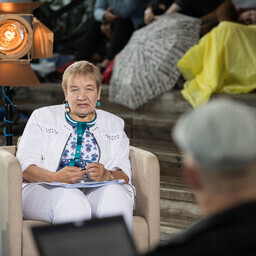
Helle Metslang sai riikliku teaduspreemia humanitaarteaduste alal. Ta uuris
eesti keele kasutus
t ja mitmekesisust. Metslang juhtis suurt projektit, millest sündis uus
Eesti grammatika
. See grammatika näitab, kuidas eesti keel täna kasutatakse.
eesti keele kasutus
Tõlge fraasile: eesti keele kasutus
EN
use of Estonian language
Eesti grammatika
Tõlge fraasile: Eesti grammatika
EN
Estonian grammar
Metslang kuulis preemiast koosoleku ajal. Ta oli üllatunud ja rõõmus. Ta ütles, et tema
teadustöö
on olnud
suur koostöö
paljude inimestega. Tema töö keskmes on olnud huvitavad teemad ja arutelud kolleegidega. Ta on kirjutanud palju artikleid ja raamatuid.
teadustöö
Tõlge fraasile: teadustöö
EN
scientific work
suur koostöö
Tõlge fraasile: suur koostöö
EN
great collaboration
Metslang juhtis suurt
grammatikaprojekt
i. Ta uuris koos Külli Habichtiga, kuidas
eesti kirjakeel
19. sajandil arenes. Ta uuris ka, kuidas saksa keel mõjutas eesti autoreid.
grammatikaprojekt
Tõlge fraasile: grammatikaprojekt
EN
grammar project
eesti kirjakeel
Tõlge fraasile: eesti kirjakeel
EN
Estonian written language
Metslang on uurinud ka
regivärss
e koos Eesti Kirjandusmuuseumi inimestega. Ta osales ka projektis, mis uuris subjektiivsust ja intersubjektiivsust eesti keeles.
regivärss
Tõlge fraasile: regivärss
EN
folk verse
Metslang ütles, et
teadustöö
s on palju häid ideid, aga vahepeal on raske neid ellu viia. Raha on vahel vähe ja tuleb võidelda selle eest, et projekt saaks jätkuda. Näiteks subjektiivsuse ja intersubjektiivsuse projekt on nüüd lõppenud ja inimesed tegelevad uute teemadega. Metslang ütles, et
teadustöö
s on
õnnemäng
, kui saad alustatu edasi uurida.
teadustöö
Tõlge fraasile: teadustöö
EN
scientific work
teadustöö
Tõlge fraasile: teadustöö
EN
scientific work
õnnemäng
Tõlge fraasile: õnnemäng
EN
game of luck
Metslang ütles, et oleks põnev uurida, kuidas
eesti kirjakeel
19. sajandil arenes. Ta tahaks uurida, kuidas saksa keelest sai eesti keel ja kuidas keel muutus inimeste hoiakutes. Külli Habichti
töörühm
on palunud raha selleks projektiks, aga ta pole seda saanud.
eesti kirjakeel
Tõlge fraasile: eesti kirjakeel
EN
Estonian written language
töörühm
Tõlge fraasile: töörühm
EN
work group
Metslang ütles, et teadlastel peaks olema töö, mis võimaldab neil oma teemadega edasi tegeleda. Ta soovitas, et noored teadlased saaksid minna välismaale
järeldoktorantuur
i. Ta tahaks, et
töörühm
ad saaksid teha seda, milles nad on head ja mida nad on alustanud.
järeldoktorantuur
Tõlge fraasile: järeldoktorantuur
EN
postdoctoral studies
töörühm
Tõlge fraasile: töörühm
EN
work group
Helle Metslang received the national science award in the field of humanities. She studied the use and diversity of the Estonian language. Metslang led a major project that resulted in a new Estonian grammar. This grammar shows how the Estonian language is used today.
Metslang heard about the award during a meeting. She was surprised and happy. She said that her research has been a great collaboration with many people. Her work has focused on interesting topics and discussions with colleagues. She has written many articles and books.
Metslang led a major grammar project. She studied together with Külli Habicht how the Estonian written language developed in the 19th century. She also studied how the German language influenced Estonian authors.
Metslang has also researched regilaul (traditional Estonian folk songs) with the people from the Estonian Literary Museum. She also participated in a project that studied subjectivity and intersubjectivity in the Estonian language.
Metslang said that there are many good ideas in research, but sometimes it is difficult to implement them. There is sometimes little money, and one has to fight for the project to continue. For example, the project on subjectivity and intersubjectivity has now ended, and people are working on new topics. Metslang said that research is a game of luck when you can continue what you started.
Metslang said that it would be exciting to study how the Estonian written language developed in the 19th century. She would like to study how Estonian emerged from German and how the language changed in people's attitudes. Külli Habicht's team has asked for funding for this project, but she has not received it.
Metslang said that scientists should have work that allows them to continue with their topics. She recommended that young scientists go abroad for postdoctoral studies. She would like research teams to be able to do what they are good at and what they have started.