
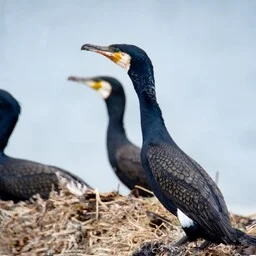
Researchers from the University of Tartu found that cormorants reduce the number of other birds. Cormorants grow rapidly and take up a lot of space. This makes life harder for other birds.
Cormorants eat fish and require a lot of space. They nest densely together. This means other birds have less space. Some birds, such as mergansers and gulls, can no longer find good nesting sites.
The study examined 261 islands between 1960 and 2022. Cormorants nested on 71 islands. When cormorants arrived, the number of other birds decreased. Some birds, like the goldeneye and goosander, almost completely disappeared.
Cormorants don't kill other birds, but they take over their nesting sites. Birds have to find new places. When there are many cormorants, birds have nowhere to go. This can lead to a decline in bird populations.
On some islands, cormorants disappeared. Then other birds returned. This shows that birds can return when space becomes available again. But it takes time.
Cormorants are not bad, but they change nature. Scientists want to study further how this affects other islands. The relocation of birds may cause new problems.