
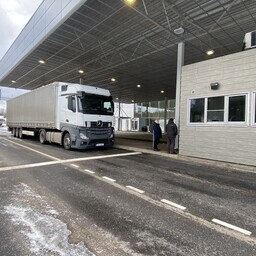
The government will close the Luhamaa and Koidula highway border crossings at night starting from February 24. The border crossings will remain open for 12 hours during the day. Prime Minister Kristen Michal stated that Russia is behaving irrationally at the border. Therefore, it is necessary to free up resources for better border protection.
Starting from February 24, the operating hours of the border crossings will be reduced for three months. The border crossings will be closed at night to allow better monitoring of the situation elsewhere along the border. Customs control will continue fully in the direction of Russia. Further decisions will depend on security needs and developments at the border.
Interior Minister Igor Taro said that the behavior of Russian border guards constantly requires resources and attention. Reducing the nighttime hours of border crossings allows resources to be redirected where they are most needed.
Initially, the decision will be in effect for three months. After that, the situation will be reassessed, and further decisions will be made. The number of border crossings has significantly decreased, making the reduction in border crossing workload logical.
Compared to 2018, the number of border crossings has decreased approximately fivefold. In 2018, 5.3 million people crossed the eastern border, but in 2025, this number was 1,084,320. The highest traffic was at the Narva border crossing, followed by the Luhamaa and Koidula border crossings.
In 2025, a total of 239,542 people crossed the Luhamaa border crossing. Of these, 41% were European Union citizens, including Estonian and Latvian citizens. 59% were citizens of third countries, including Russian citizens. In the same year, 213,910 people crossed the Koidula border crossing. Of these, 59% were European Union citizens, including Estonian citizens. 41% were citizens of third countries, including Russian citizens.