
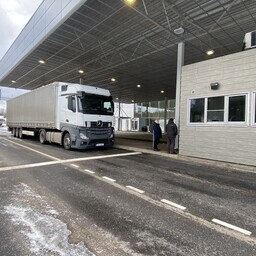
Valitsus sulgeb Luhamaa ja Koidula
maanteepiiripunkt
id öösel alates 24. veebruarist. Piiripunktid on päeval avatud 12 tundi. Peaminister Kristen Michal ütles, et Venemaa käitub piiril ebaratsionaalselt. Seetõttu on vaja vabastada ressursse piiri paremaks kaitsmiseks.
maanteepiiripunkt
Tõlge fraasile: maanteepiiripunkt
EN
highway border crossing point
Alates 24. veebruarist vähendatakse
piiripunktide lahtiolekuaeg
a kolmeks kuuks. Piiripunktid suletakse öösel, et saaksime mujal piiril olukorra paremini jälgida. Tollikontroll jätkub täielikult Venemaa suunas. Edasised otsused sõltuvad julgeolekuvajadustest ja piiril toimuvast.
piiripunktide lahtiolekuaeg
Tõlge fraasile: piiripunktide lahtiolekuaeg
EN
border crossing opening hours
Siseminister Igor Taro ütles, et Venemaa
piirivalvurite käitumine
nõuab pidevalt ressursse ja tähelepanu. Piiripunktide öiste tunnide vähendamine võimaldab ressursse suunata sinna, kus neid kõige rohkem vaja.
piirivalvurite käitumine
Tõlge fraasile: piirivalvurite käitumine
EN
behavior of border guards
Esialgu kehtib otsus kolm kuud. Pärast seda hinnatakse olukorda uuesti ja tehakse edasised otsused. Piiriületuste arv on märgatavalt vähenenud, mis muudab piiripunktide töömahu vähendamise loogiliseks.
Võrreldes 2018. aastaga on
piiriületuste arv
vähenenud ligikaudu viis korda. 2018. aastal ületas idapiiri 5,3 miljonit inimest, aga 2025. aastal oli see arv 1 084 320. Suurim liiklus oli Narva piiripunktis, millele järgnesid Luhamaa ja Koidula piiripunkt.
piiriületuste arv
Tõlge fraasile: piiriületuste arv
EN
number of border crossings
2025. aastal ületas Luhamaa piiripunkti kokku 239 542 inimest. Neist 41% olid
Euroopa Liidu kodanikud
, sealhulgas Eesti ja Läti kodanikud. 59% olid
kolmandate riikide kodanikud
, sealhulgas Vene kodanikud. Koidula piiripunkti ületas samal aastal 213 910 inimest. Neist 59% olid
Euroopa Liidu kodanikud
, sealhulgas Eesti kodanikud. 41% olid
kolmandate riikide kodanikud
, sealhulgas Vene kodanikud.
Euroopa Liidu kodanikud
Tõlge fraasile: Euroopa Liidu kodanikud
EN
EU citizens
kolmandate riikide kodanikud
Tõlge fraasile: kolmandate riikide kodanikud
EN
citizens of third countries
Euroopa Liidu kodanikud
Tõlge fraasile: Euroopa Liidu kodanikud
EN
EU citizens
kolmandate riikide kodanikud
Tõlge fraasile: kolmandate riikide kodanikud
EN
citizens of third countries
The government will close the Luhamaa and Koidula highway border crossings at night starting from February 24. The border crossings will remain open for 12 hours during the day. Prime Minister Kristen Michal stated that Russia is behaving irrationally at the border. Therefore, it is necessary to free up resources for better border protection.
Starting from February 24, the operating hours of the border crossings will be reduced for three months. The border crossings will be closed at night to allow better monitoring of the situation elsewhere along the border. Customs control will continue fully in the direction of Russia. Further decisions will depend on security needs and developments at the border.
Interior Minister Igor Taro said that the behavior of Russian border guards constantly requires resources and attention. Reducing the nighttime hours of border crossings allows resources to be redirected where they are most needed.
Initially, the decision will be in effect for three months. After that, the situation will be reassessed, and further decisions will be made. The number of border crossings has significantly decreased, making the reduction in border crossing workload logical.
Compared to 2018, the number of border crossings has decreased approximately fivefold. In 2018, 5.3 million people crossed the eastern border, but in 2025, this number was 1,084,320. The highest traffic was at the Narva border crossing, followed by the Luhamaa and Koidula border crossings.
In 2025, a total of 239,542 people crossed the Luhamaa border crossing. Of these, 41% were European Union citizens, including Estonian and Latvian citizens. 59% were citizens of third countries, including Russian citizens. In the same year, 213,910 people crossed the Koidula border crossing. Of these, 59% were European Union citizens, including Estonian citizens. 41% were citizens of third countries, including Russian citizens.