
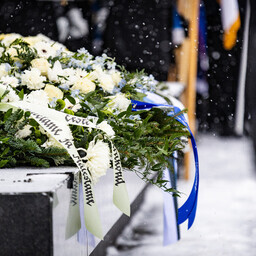
Relvarahu Eesti ja Nõukogude Venemaa vahel hakkas kehtima 3. jaanuaril 1920. See lõpetas sõja ja viis Tartu rahulepinguni. Kell 10.30 peeti vaikuseminut. Austati neid, kes surid Eesti vabaduse eest.
Kaitseministeeriumi kantsler Kaimo Kuusk ütles: "
106 aastat tagasi lõppes sõda
. Kuu aega hiljem
sõlmiti Tartu rahu
. See kinnitas Eesti iseseisvust." Kuusk lisas: "Maailm on muutunud, aga üks asi jääb samaks -
kodumaad tuleb kaitsta
.
Ukrainlased võitlevad täna sama vaenlase vastu
."
106 aastat tagasi lõppes sõda
Tõlge fraasile: 106 aastat tagasi lõppes sõda
EN
106 years ago the war ended
sõlmiti Tartu rahu
Tõlge fraasile: sõlmiti Tartu rahu
EN
the Tartu Peace Treaty was signed
kodumaad tuleb kaitsta
Tõlge fraasile: kodumaad tuleb kaitsta
EN
the homeland must be defended
Ukrainlased võitlevad täna sama vaenlase vastu
Tõlge fraasile: Ukrainlased võitlevad täna sama vaenlase vastu
EN
Ukrainians are fighting the same enemy today
Nõukogude Venemaaga sõlmiti vaherahu 31. detsembril 1919. Sõda lõppes 3. jaanuaril 1920 kell 10.30. 2. veebruaril kirjutati alla rahulepingule. Eesti võitis sõja.
Alates 1920. aastast peetakse iga aasta 3. jaanuaril vaikuseminutit. Austatakse neid, kes võitlesid ja surid Vabadussõjas.
Vabadussõjas võitles Eesti eest umbes 75 000 inimest
. Kokku hukkus üle 6000 inimese.
Vabadussõjas võitles Eesti eest umbes 75 000 inimest
Tõlge fraasile: Vabadussõjas võitles Eesti eest umbes 75 000 inimest
EN
about 75,000 people fought for Estonia in the War of Independence
Narvas tähistati aastapäeva rivistusega
. Osales ligi 350 sõjaväelast. Lisaks eestlastele olid ka sõdurid Suurbritanniast, USA-st ja Prantsusmaalt. Pärast rivistust said inimesed vaadata sõjaväetehnikat.
Narvas tähistati aastapäeva rivistusega
Tõlge fraasile: Narvas tähistati aastapäeva rivistusega
EN
the anniversary was celebrated in Narva with a parade
The armistice between Estonia and Soviet Russia came into effect on January 3, 1920. It ended the war and led to the Tartu Peace Treaty. At 10:30, a moment of silence was held. Those who died for Estonia's freedom were honored.
Chancellor of the Ministry of Defense Kaimo Kuusk said: "106 years ago, the war ended. A month later, the Tartu Peace was signed. It confirmed Estonia's independence." Kuusk added: "The world has changed, but one thing remains the same - the homeland must be defended. Ukrainians are fighting the same enemy today."
An armistice with Soviet Russia was signed on December 31, 1919. The war ended on January 3, 1920, at 10:30. On February 2, the peace treaty was signed. Estonia won the war.
Since 1920, a moment of silence has been held every year on January 3. Those who fought and died in the War of Independence are honored.
Approximately 75,000 people fought for Estonia in the War of Independence. In total, over 6,000 people died.
In Narva, the anniversary was celebrated with a parade. Nearly 350 military personnel participated. In addition to Estonians, there were also soldiers from Great Britain, the USA, and France. After the parade, people could view military equipment.