
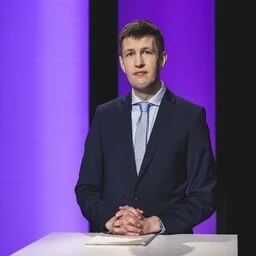
Demograaf Mark Gortfelder ütleb
, et kui praegused trendid jätkuvad, siis sajandi lõpuks võib
eestlaste osakaal Eestis
olla pool praegusest.
Demograaf Mark Gortfelder ütleb
Tõlge fraasile: Demograaf Mark Gortfelder ütleb
EN
Demographer Mark Gortfelder says
eestlaste osakaal Eestis
Tõlge fraasile: eestlaste osakaal Eestis
EN
the share of Estonians in Estonia
Sündide arv on vähenenud. See tähendab, et järgmised põlvkonnad on väiksemad. See on
negatiivne trend
.
negatiivne trend
Tõlge fraasile: negatiivne trend
EN
negative trend
Gortfelder ütleb, et Eesti statistika näitab suurt sisserännet. See tähendab, et eestlaste osakaal võib langeda 50 protsendini.
Sündimuse langus on suur probleem. Euroopa rahvaarvu prognoose on viimastel aastatel alla korrigeeritud.
Gortfelder märkis, et Läänemere piirkonnas ja Ida-Euroopas on sündimus langenud. Kriisid, nagu Ukraina sõda ja majandusprobleemid, mõjutavad seda. Kuid on ka pikaajaline trend, kus inimesed saavad vähem lapsi.
Eestis, Lätis ja Leedus on
potentsiaalsete sünnitajate arv
vähenenud. See tähendab, et lapsi sünnib vähem.
potentsiaalsete sünnitajate arv
Tõlge fraasile: potentsiaalsete sünnitajate arv
EN
number of potential parents
Rahvastiku vähenemine mõjutab Eesti ühiskonda. Näiteks võib see muuta ajateenistust või haridust.
Gortfelder ütleb, et tulevikus peame
keskenduma olulistele asjadele
, nagu transport ja haridus, mitte luksusobjektidele.
keskenduma olulistele asjadele
Tõlge fraasile: keskenduma olulistele asjadele
EN
focus on important things
Statistikaameti andmetel vähenes Eesti rahvaarv 2025. aastal 9250 inimese võrra. Selle põhjuseks oli
negatiivne loomulik iive
ja
negatiivne rändesaldo
.
negatiivne loomulik iive
Tõlge fraasile: negatiivne loomulik iive
EN
negative natural increase
negatiivne rändesaldo
Tõlge fraasile: negatiivne rändesaldo
EN
negative migration balance
Eestis elab palju erineva kodakondsusega inimesi. 82,2 protsendil on
Eesti kodakondsus
, 5,5 protsendil
Venemaa kodakondsus
ja 4,6 protsendil
Ukraina kodakondsus
.
Eesti kodakondsus
Tõlge fraasile: Eesti kodakondsus
EN
Estonian citizenship
Venemaa kodakondsus
Tõlge fraasile: Venemaa kodakondsus
EN
Russian citizenship
Ukraina kodakondsus
Tõlge fraasile: Ukraina kodakondsus
EN
Ukrainian citizenship
Demographer Mark Gortfelder says that if current trends continue, by the end of the century the proportion of Estonians in Estonia could be half of what it is now.
The number of births has decreased. This means that future generations will be smaller. This is a negative trend.
Gortfelder says that Estonian statistics show significant immigration. This means the proportion of Estonians could drop to 50 percent.
The decline in birth rates is a major problem. European population forecasts have been revised downward in recent years.
Gortfelder noted that birth rates have declined in the Baltic region and Eastern Europe. Crises such as the war in Ukraine and economic problems are affecting this. But there is also a long-term trend where people are having fewer children.
In Estonia, Latvia, and Lithuania, the number of potential childbearing women has decreased. This means fewer children are being born.
Population decline affects Estonian society. For example, it may change military service or education.
Gortfelder says that in the future we need to focus on important things like transport and education, not luxury items.
According to Statistics Estonia, the population of Estonia decreased by 9,250 people in 2025. The reasons for this were negative natural increase and negative net migration.
Many people with different citizenships live in Estonia. 82.2 percent have Estonian citizenship, 5.5 percent have Russian citizenship, and 4.6 percent have Ukrainian citizenship.