
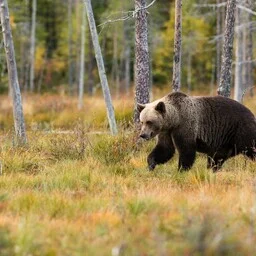
Eestis elab palju karusid
. Paljud räägivad, et
metsas on neile vähe ruumi
. Kas see on tõsi?
Tartu Ülikooli teadlased uurivad seda
.
Eestis elab palju karusid
Tõlge fraasile: Eestis elab palju karusid
EN
Many bears live in Estonia
metsas on neile vähe ruumi
Tõlge fraasile: metsas on neile vähe ruumi
EN
there is little space for them in the forest
Tartu Ülikooli teadlased uurivad seda
Tõlge fraasile: Tartu Ülikooli teadlased uurivad seda
EN
University of Tartu researchers are studying this
Karud on looduse jaoks väga tähtsad
. Nad söövad erinevat toitu ja
aitavad loodust hoida puhtana
. Karud söövad ka surnud loomi, mis aitab loodusel kiiremini taastuda.
Karud on looduse jaoks väga tähtsad
Tõlge fraasile: Karud on looduse jaoks väga tähtsad
EN
Bears are very important for nature
aitavad loodust hoida puhtana
Tõlge fraasile: aitavad loodust hoida puhtana
EN
help keep nature clean
Euroopas elab umbes 20 500 karu.
Karud elavad seal, kus inimesi on vähe
. Karude elualad on erineva suurusega. Näiteks Alpides võib karu kodupiirkond olla 57–74 ruutkilomeetri suurune, aga Serbias isegi üle 4000 ruutkilomeetri.
Karud elavad seal, kus inimesi on vähe
Tõlge fraasile: Karud elavad seal, kus inimesi on vähe
EN
Bears live where there are few people
Karud ei taha elada inimeste läheduses
. Uuringud näitavad, et
karud liiguvad rohkem öösel
, kui inimesed on vähem aktiivsed.
Noored karud õpivad aegamööda inimestest eemale hoidma
.
Karud ei taha elada inimeste läheduses
Tõlge fraasile: Karud ei taha elada inimeste läheduses
EN
Bears don't want to live near people
karud liiguvad rohkem öösel
Tõlge fraasile: karud liiguvad rohkem öösel
EN
bears move more at night
Noored karud õpivad aegamööda inimestest eemale hoidma
Tõlge fraasile: Noored karud õpivad aegamööda inimestest eemale hoidma
EN
Young bears gradually learn to stay away from people
Eestis on karude kohta vähe andmeid
. Üks uuring näitas, et üks emane karu elas Väike-Maarja piirkonnas. Tema kodupiirkond oli ligi 62 ruutkilomeetri suurune.
Eestis on karude kohta vähe andmeid
Tõlge fraasile: Eestis on karude kohta vähe andmeid
EN
There is little data about bears in Estonia
Karud võivad satuda inimeste lähedusse
, sest nad
otsivad toitu või põgenevad teiste karude eest
. Noored karud ja emakarud on eriti sellele vastuvõtlikud.
Karud võivad satuda inimeste lähedusse
Tõlge fraasile: Karud võivad satuda inimeste lähedusse
EN
Bears may come close to people
otsivad toitu või põgenevad teiste karude eest
Tõlge fraasile: otsivad toitu või põgenevad teiste karude eest
EN
searching for food or fleeing from other bears
Et paremini mõista, kuidas ja kus karud liiguvad,
kasutavad teadlased GPS-kaeluseid
.
Need kaelused jälgivad karude liikumist
. Tartu Ülikooli teadlased koguvad raha, et osta rohkem kaeluseid ja
uurida karude elu veelgi täpsemalt
.
kasutavad teadlased GPS-kaeluseid
Tõlge fraasile: kasutavad teadlased GPS-kaeluseid
EN
scientists use GPS collars
Need kaelused jälgivad karude liikumist
Tõlge fraasile: Need kaelused jälgivad karude liikumist
EN
These collars track bear movements
uurida karude elu veelgi täpsemalt
Tõlge fraasile: uurida karude elu veelgi täpsemalt
EN
study bear life even more precisely
There are many bears living in Estonia. Many say there is too little space for them in the forest. Is this true? Scientists from the University of Tartu are researching this.
Bears are very important for nature. They eat various foods and help keep nature clean. Bears also consume dead animals, which helps nature recover faster.
There are about 20,500 bears in Europe. Bears live where there are few humans. Their habitats vary in size. For example, in the Alps, a bear's home range can be 57–74 square kilometers, while in Serbia, it can even exceed 4,000 square kilometers.
Bears do not want to live near humans. Studies show that bears move more at night when humans are less active. Young bears gradually learn to avoid humans.
There is little data about bears in Estonia. One study showed that a female bear lived in the Väike-Maarja region. Her home range was nearly 62 square kilometers.
Bears may come close to humans because they are searching for food or fleeing from other bears. Young bears and female bears are particularly prone to this.
To better understand how and where bears move, scientists use GPS collars. These collars track the bears' movements. Scientists from the University of Tartu are raising funds to purchase more collars and study bear life even more precisely.