
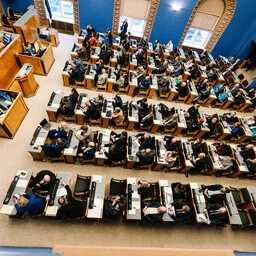
The Riigikogu passed a new law on Monday. This law makes it easier to bring workers to Estonia from abroad. 45 members of the Riigikogu voted in favor and 31 against. Coalition members mainly voted in favor. Some did not vote at all.
The new law will help solve labor shortages. Estonia needs nearly 1,400 specialists and 700 skilled workers every year. Currently, the Estonian education system is insufficient to meet these needs.
The law changes working conditions. In areas with labor shortages, workers can more easily obtain residence permits. The salary requirement is 80% of the average Estonian salary. This helps avoid bringing in cheap labor.
The government will create a list of areas with labor shortages. It has clear rules. The list is valid for up to five years. Currently, these are industry and transport.
The number of residence permits depends on the economy. In a good economic year, up to 2,600 permits can be issued. In worse times, up to 1,300 permits.
The law will bring more taxes to the country. Annually, it could generate 14-27 million euros. If workers stay longer, the amount could be even higher.
The Riigikogu also passed a second law. This law follows European Union rules. It helps foreigners work more easily in Estonia. 41 members voted in favor and 25 against.
The new law allows workers to change employers. They do not need to apply for a new residence permit. The new employer simply needs to notify the change.
Workers can now be unemployed for longer. If the residence permit is less than 2 years, up to 3 months. For longer permits, up to 6 months. In exceptional cases, up to 9 months.
Long-term workers can now receive social benefits. For example, parental benefits or pensions. However, they do not receive family benefits.
In recent years, violations have increased. In 2021, there were 380 violations. In 2024, there were already 524. Fines were too low. Now, fines are being increased. The maximum fine is now 100,000 euros. This should help reduce violations.