
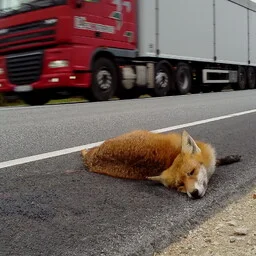
Wildlife accidents occur more frequently in autumn and spring. They also happen often in the mornings and evenings when people are commuting to or from work.
Most accidents occur on major highways such as Tallinn-Tartu, Tallinn-Narva, and Tallinn-Pärnu. Animals cannot avoid fast-moving cars.
In spring, many animals have offspring. Young animals move around more and often end up on roads. In autumn, moose and deer have their mating season, which makes them bolder.
During the day, accidents happen most often in the morning and evening. This is when both people and animals are most active. Traffic is heavier on weekends, especially on Fridays.
In spring 2020, traffic decreased due to coronavirus restrictions. This helped save animal lives as there were fewer accidents.
Special crossings like green bridges have been built for wildlife. These help animals cross roads safely. For example, the Kolu eco-duct on the Tallinn-Tartu highway has been successful.
In Estonia, drivers are not fined if they hit a wild animal. This may result in not all accidents being included in statistics.
If an accident occurs, it should be reported to number 1247. The carcass of a large animal belongs to the local hunting association. Small animals can be removed by oneself.
To avoid accidents, drive carefully, especially in the mornings and evenings. If you see an animal near the road, be prepared to brake as it may run onto the road.