
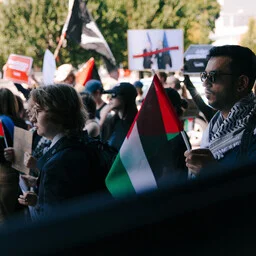
People who attended protests have encountered police officers who asked them for documents to photograph. The police say this is necessary for threat prevention. They do not retain protesters' data.
One protester spoke about an encounter with police officers. They were near Kadriorg Palace in Tallinn when police asked to photograph their ID card. The officers did not say why they photographed the document.
People are asking whether the police are adding protesters to a suspicious persons database. The police respond that they check documents for threat prevention.
Police expert Kalmer Filatov said the police may check documents for threat prevention. The police take a photo of the document to quickly verify the data. The photo is then deleted.
Filatov said the police do not collect protesters' data. Photos are taken only for data verification. All queries to police databases are logged.
Filatov explained that police are not usually present at protests. Police only respond when there is a threat or violation. Plainclothes officers are present during state visits or large protests.
The police do not retain photos taken of documents. Photos are deleted after use. The police do not use facial recognition at protests.
The Security Police (KAPO) usually do not ask for documents at protests. KAPO has other duties, while documents are requested by the Police and Border Guard Board (PPA).