
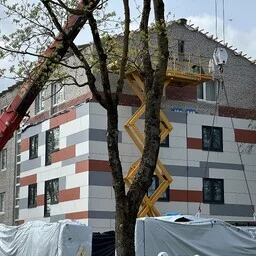
The Ministry of Climate has prepared a preliminary building renovation plan. According to it, Estonian buildings should be energy-efficient and low-carbon by 2050.
The public and private sectors must invest 8.6 billion euros in building renovations between 2026 and 2035. The state will provide subsidies of approximately 1.5 billion euros.
The goal is to reduce the average energy consumption of the housing stock by 20-22% by 2035. The main focus is on buildings constructed before 2000.
The plan also includes the renovation of non-residential buildings. At least 16% of the least energy-efficient non-residential buildings will be renovated by 2030.
The public sector has a leading role. Starting next year, all new public sector buildings must be emission-free.
Cost-optimal methods will be used for building renovations. For residential buildings, comprehensive renovation is prioritized, while minimum standards apply to non-residential buildings.
Homeowners will be supported through financing and loan guarantees. Low-income households will receive non-repayable grants.
In addition to financial measures, technical advice and digital tools will be provided. This should accelerate the pace of renovation.
For housing associations, the main support comes in the form of non-repayable grants. State loan and guarantee instruments will also be used.
Prefabricated elements are preferred for renovations. This improves construction quality and reduces time costs.
The national plan also emphasizes regional balance and the preservation of culturally valuable buildings. The public sector will set an example.
Tax incentives to support apartment building renovations are under consideration. This would also bring additional revenue to the state budget.
The plan proposes easing legal obstacles. This includes changes to the Apartment Ownership and Housing Association Act.
In 2020, Estonia had nearly 239,000 buildings in use. Three-quarters of these were residential buildings. Approximately 82% of buildings were constructed before 2000.
About 33% of apartment buildings built before 2000 have been renovated. About 10% of small residential buildings have been renovated.
By 2050, approximately 10,000 apartment buildings need full renovation and 2,500 need phased renovation.
The Ministry of Climate plans to finalize the plan by December this year.