
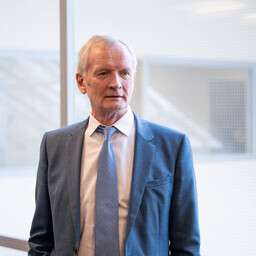
Tiit Land on Tallinna tehnikaülikooli rektor.
Ta ütleb, et riik ei maksa ülikoolidele raha.
Ülikoolid vajavad raha
.
Ülikoolid vajavad raha
Tõlge fraasile: Ülikoolid vajavad raha
EN
Universities need money
Riik lubas 40 miljonit eurot
, kuid ei maksa.
Riik lubas 40 miljonit eurot
Tõlge fraasile: Riik lubas 40 miljonit eurot
EN
The state promised 40 million euros
Riik lubas ülikoolidele kokku 130 miljonit.
Kuid ülikoolid saavad ainult 90 miljonit.
See puuduv raha on juba lubatud.
Raha on tarvis ülikoolide tööks.
Kulud on tõusnud
.
Kulud on tõusnud
Tõlge fraasile: Kulud on tõusnud
EN
Costs have risen
2010. aastal oli keskmine palk alla 800 euro.
Nüüd on keskmine palk 1600 euro.
2027. aastast külmutatakse kulud uuesti
.
2027. aastast külmutatakse kulud uuesti
Tõlge fraasile: 2027. aastast külmutatakse kulud uuesti
EN
Costs will be frozen again from 2027
Ülikoolidesse tuleb rohkem noori
.
Ülikoolidesse tuleb rohkem noori
Tõlge fraasile: Ülikoolidesse tuleb rohkem noori
EN
More young people are coming to universities
Ülikoolidel pole piisavalt raha.
Riik tahab, et 45% inimestest saaks kõrgharidus
.
Riik tahab, et 45% inimestest saaks kõrgharidus
Tõlge fraasile: Riik tahab, et 45% inimestest saaks kõrgharidus
EN
The state wants 45% of people to get higher education
Land ütleb, et ülikoolid vajavad rohkem raha.
Riik ei ütle, kuidas õpetada
.
Riik ei ütle, kuidas õpetada
Tõlge fraasile: Riik ei ütle, kuidas õpetada
EN
The state does not say how to teach
Kuid riik saab esitada ootusi rahastusega.
Riik ja ülikoolid räägivad rahast
.
Riik ja ülikoolid räägivad rahast
Tõlge fraasile: Riik ja ülikoolid räägivad rahast
EN
The state and universities are talking about money
2026. aasta raha on korras.
2027. aastal on raha ohtu.
Riik tahab, et õpilased läheksid rakenduskõrgkooli.
Land ütleb, et bakalaureuseõpe on odavam.
Erialad on kallimad, mitte õppeasutus.
Bakalaureuseõpe maksab 3300 kuni 8900 eurot
.
Bakalaureuseõpe maksab 3300 kuni 8900 eurot
Tõlge fraasile: Bakalaureuseõpe maksab 3300 kuni 8900 eurot
EN
Bachelor's studies cost 3,300 to 8,900 euros
Rakendusõpe maksab 4200 kuni 14 000 eurot
.
Rakendusõpe maksab 4200 kuni 14 000 eurot
Tõlge fraasile: Rakendusõpe maksab 4200 kuni 14 000 eurot
EN
Vocational training costs 4,200 to 14,000 euros
Tiit Land is the rector of Tallinn University of Technology.
He says that the state is not paying money to universities.
Universities need money.
The state promised 40 million euros but has not paid.
The state promised a total of 130 million to universities.
But universities are only receiving 90 million.
This missing money has already been promised.
The money is needed for the universities' work.
Costs have increased.
In 2010, the average salary was below 800 euros.
Now, the average salary is 1600 euros.
From 2027, costs will be frozen again.
More young people are coming to universities.
Universities do not have enough money.
The state wants 45% of the people to get a higher education.
Land says that universities need more money.
The state does not dictate how to teach.
However, the state can set expectations with funding.
The state and universities are discussing money.
The 2026 budget is in order.
In 2027, funding is at risk.
The state wants students to go to applied higher education institutions.
Land says that bachelor's studies are cheaper.
Fields of study are more expensive, not the educational institution.
Bachelor's studies cost between 3300 and 8900 euros.
Applied studies cost between 4200 and 14,000 euros.