
The Estonian Orthodox Church and Pühtitsa Monastery have appealed to the European Court of Human Rights. They are protesting against legislative changes. The new law gives churches and congregations time to sever ties with the Russian Orthodox Church. If the ties are not terminated by December 28, the Minister of the Interior will turn to the court for forced termination.
The church and monastery are represented by sworn advocate Artur Knjazev. He says that the Ministry of the Interior wants local Orthodox believers to cut ties with the church. This church has existed for over a thousand years. The statutes of the church and monastery have been amended, but Knjazev says the state demands more than just paperwork corrections.
The European Convention on Human Rights states that freedom of religion is an absolute right. The state can regulate how religion is practiced publicly, but it cannot compel a person to change their faith. Knjazev claims that this is exactly what is happening now.
The Estonian Orthodox Church was previously known as the Estonian Orthodox Church of the Moscow Patriarchate. The church changed its name in 2024. The Supreme Court upheld the law on June 8. Six judges disagreed and found that the law does not meet the requirements of legal clarity.
Sworn advocate Steven-Hristo Evestus says the Ministry of the Interior wants to terminate both administrative and religious ties. He adds that in Estonia, neither the church nor the monastery has done anything illegal. There is punishment, but there is no offense.
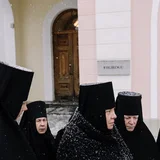
Approximately 90 nuns live in Pühtitsa Monastery. The nuns have lived and prayed there for over 135 years. They also pray for Estonia. Knjazev says that if the security of the state is shaken by the prayers of ninety elderly women, then the problem is not with the nuns.
The church continues to communicate with the Ministry of the Interior, but the monastery has not been invited to a separate meeting. The amendments to the Churches and Congregations Act came into force on June 27, 2026. The law gives churches six months to change their statutes and activities.
The Riigikogu adopted the new law on April 9, 2025, but the president did not promulgate it. The Riigikogu adopted the law again on June 18, 2025, but the president again left it unpublished. The president asked the Riigikogu to reconsider the law and bring it into line with the constitution.
The Riigikogu adopted the law again on September 17, 2025. The president submitted a request to the Supreme Court to check whether the law is in conflict with the constitution. The Supreme Court ruled on June 8 that the law is in accordance with the constitution.