
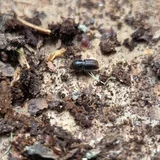
The population of spruce bark beetles is monitored by the Environmental Board and the State Forest Management Centre. In some southern Estonian counties, it is also monitored by the Estonian University of Life Sciences. Their data shows that the population of beetles has decreased over the last two years.
Merit Ehrpais, a specialist at the Environmental Board, says that in 2022, the beetle population was very high. In 2023, it remained high, but in some counties, the population began to decrease. In 2024, the decline was more noticeable, and in 2025, the population was even smaller.
Kristjan Ait, a researcher at the Estonian University of Life Sciences, adds that this year's trapping numbers are also moderate. One reason is Estonia's summer weather. Last year, the summer was cool and rainy, which helped reduce the population. This year, the spring was also cool and rainy, affecting the beetle population.
Results from pheromone traps show that cooler, wetter, and windier weather reduces the beetle population. During warmer periods, the population increases again.
In addition, the number of natural enemies of the beetles has increased in recent years. These include bark beetle flies, rove beetles, and birds. They help limit the beetle population.
Meelis Matkamäe, chairman of the Private Forest Association, says that the last two years have been good for managed forests. The spruce bark beetle usually lives in weakened trees. In managed forests, it is harder for beetles to survive.
Kristjan Ait explains that beetles have worse conditions for reproduction in managed forests and mixed stands. In the future, it is difficult to predict how the beetle population will change. There are many variables in nature that can affect the situation.