
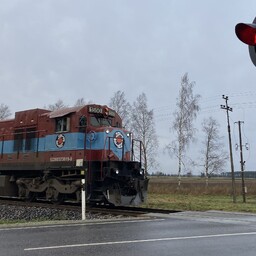
Rail Baltic Estonia sõnul on praegu tegemist vaid katsetusega. Otsus, kas aherainet hakatakse Pärnusse suures mahus vedama, tehakse uuel aastal.
Kaubarongid pole Pärnusse sõitnud juba mitu aastat. Kuid detsembris võisid pärnakad kaubajaamas paaril korral jälle kaubarongi näha. Ettevõte Operail katsetab Ida-Virumaalt aheraine vedu. Seda loodetakse tuleval aastal
Rail Balticu ehitus
eks Pärnusse vedama hakata.
Rail Balticu ehitus
Tõlge fraasile: Rail Balticu ehitus
EN
Rail Baltic construction
Testveod on vajalikud, et enne massvedude alustamist saaks
tehnoloogia läbi töötada
. Kaks esimest rongi läksid väga edukalt. Ühes rongis veetakse ligikaudu
2000 tonni aherainet
. Testsõiduga tarnitakse kokku ligikaudu 10 000 aheraine killustikku. Seda kasutatakse
trassi ligipääsuteede rajamiseks
.
tehnoloogia läbi töötada
Tõlge fraasile: tehnoloogia läbi töötada
EN
to finalize the technology
2000 tonni aherainet
Tõlge fraasile: 2000 tonni aherainet
EN
2000 tons of oil shale
trassi ligipääsuteede rajamiseks
Tõlge fraasile: trassi ligipääsuteede rajamiseks
EN
for building access roads to the track
Lähinädalatel tehakse veel testvedusid. Rail Baltic Estonia portfellijuht Janar Tükk ütleb, et ettevõte pole veel lõplikult otsustanud, kas aherainet hakatakse uuel aastal transportima.
Me katsetame praegu, kuidas seda aherainet Ida-Virumaalt tuua. Viis korda tuuakse seda Pärnusse laoplatsi. Seda materjali kasutatakse Rääma raba testlõigu tegemisel. Sellega testitakse, kuidas see seal töötab ja üldse tarneahelat. See aitab otsustada, kas see sobib projektilahenduses.
Aheraine võib olla karjääridest saadavatele materjalidele alternatiiv. Aga suures mahus Pärnusse vedamise otsus sõltub mitmest asjaolust. Otsus tehakse enne juunikuud.
Alates juunikuust algavad Tootsi-Pärnu lõigus suuremahulised ehitustööd. Enne seda tuleb otsustada, kas kasutada aherainet. Otsus sõltub ka sellest, kuidas kohalikud karjäärid suudavad materjali anda. Lõpuks mõjutab otsust ka hind – kas aheraine on turul konkurentsivõimeline.
According to Rail Baltic Estonia, this is currently just a test. The decision on whether to start transporting oil shale to Pärnu in large volumes will be made next year.
Freight trains have not been running to Pärnu for several years. However, in December, Pärnu residents could see freight trains at the freight station a couple of times. The company Operail is testing oil shale transport from Ida-Virumaa. It is hoped that this will be used for the construction of Rail Baltica in Pärnu next year.
The test shipments are necessary to work out the technology before starting mass transportation. The first two trains were very successful. One train carries approximately 2000 tons of oil shale. The test run will deliver around 10,000 tons of oil shale gravel in total. This will be used to construct access roads for the route.
More test shipments will be made in the coming weeks. Rail Baltic Estonia portfolio manager Janar Tükk says the company has not yet made a final decision on whether to start transporting oil shale next year.
We are currently testing how to bring this oil shale from Ida-Virumaa. It will be brought to the Pärnu terminal five times. This material will be used to create a test section at Rääma bog. This will test how it works there and the supply chain in general. This will help decide whether it is suitable for the project solution.
Oil shale can be an alternative to materials obtained from quarries. However, the decision to transport it to Pärnu in large volumes depends on several factors. The decision will be made before June.
Large-scale construction work on the Tootsi-Pärnu section will begin in June. Before that, a decision must be made on whether to use oil shale. The decision also depends on how local quarries can provide the material. Finally, the price also influences the decision – whether oil shale is competitive on the market.