
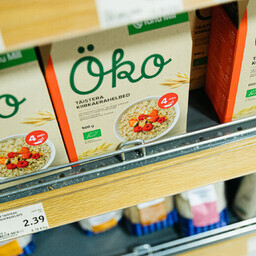
27. septembril hakkab Euroopa Liidus kehtima uus direktiiv. See direktiiv keelab
rohepesu
, kui toodete pakenditel kirjutatakse valesti nende rohelisusest. Kui inimene ostab poest toote, mille pakend räägib rohelisusest, siis see info peab olema tõendatud.
rohepesu
Tõlge fraasile: rohepesu
EN
greenwashing
Kaupmehed toetavad seda direktiivi, sest
kauba ostjad
ei oska alati eristada tõest ja valet. Kuid küsimus on selles, mida teha kaubaga, mis on juba poes, kuid millel pole
tõendatud rohelisus
e väidet. Kaupmehed tahavad, et olemasolevad tooted saaksid
tavapäraselt müüa
. Uued tooted peavad vastama uutele eeskirjadele.
kauba ostjad
Tõlge fraasile: kauba ostjad
EN
consumers
tõendatud rohelisus
Tõlge fraasile: tõendatud rohelisus
EN
proven eco-friendliness
tavapäraselt müüa
Tõlge fraasile: tavapäraselt müüa
EN
sell normally
Tootjatel võib tõusta kulud, sest nad peavad tõendama oma toodete rohelisust. See võib põhjustada kaupade
hinnatõus
u. Kuigi ühtegi
hinnatõus
u täpselt ennustada ei saa, arvatakse, et tootjad peavad rohekate väidete tõendamiseks rohkem maksma.
hinnatõus
Tõlge fraasile: hinnatõus
EN
price increase
hinnatõus
Tõlge fraasile: hinnatõus
EN
price increase
On oht, et kui ei leita
kokkulepet
, siis võib osad kaubad prügimajja sattuda. Hetkel pole täpselt selge, millised väited alluvad direktiivile. Näiteks kas roheline värv pakendil või looma pilt loetakse roheväiteks.
kokkulepet
Tõlge fraasile: kokkulepet
EN
agreement
Kaupmehed ja ametid pole veel täpselt kursis, kuidas direktiiv töötab. Väikestel tootjatel võib olla keeruline uusi eeskirju järgida, kuid ka nemad peavad neid järgima. Tarbijakaitse ja tehnilise järelevalve amet hakkab põhjalikumalt nende eeskirjadega tegelema.
Lihtsaim lahendus oleks kirjutada pakendile, et toode pole tegelikult roheline. Kuid kaupmehed ei saa seda ise pakenditele lisada. See võib põhjustada vastuolusid tootjatega ja tõsta kaupade hinda.
Seega pole välistatud, et osad tooted tuleb müügilt eemaldada ja need lähevad utiliseerimisele. Selline lahendus tundub absurdne, kuid kui riik võtab liiga range seisukoha, võib see juhtuda.
On September 27, a new directive will come into force in the European Union. This directive prohibits greenwashing if the packaging of products incorrectly states their environmental friendliness. When a person buys a product from a store whose packaging talks about its green nature, this information must be verified.
Merchants support this directive because consumers do not always know how to distinguish truth from falsehood. But the question is what to do with goods that are already in stores but do not have verified green claims. Merchants want existing products to be sold as usual. New products must comply with the new regulations.
Manufacturers may face increased costs because they need to verify the green claims of their products. This could lead to price increases for goods. Although no price increase can be precisely predicted, it is believed that manufacturers will have to pay more to verify green claims.
There is a risk that if no agreement is reached, some goods may end up in landfills. At the moment, it is not entirely clear which claims fall under the directive. For example, whether a green color on packaging or an animal image is considered a green claim.
Merchants and authorities are not yet fully aware of how the directive works. Small manufacturers may find it difficult to follow the new regulations, but they must also comply. The Consumer Protection and Technical Supervision Authority will begin to more thoroughly address these regulations.
The simplest solution would be to write on the packaging that the product is not actually green. But merchants cannot add this to the packaging themselves. This could lead to conflicts with manufacturers and increase the price of goods.
Therefore, it cannot be ruled out that some products will have to be removed from sale and sent for recycling. Such a solution seems absurd, but if the state takes too strict a position, it may happen.