
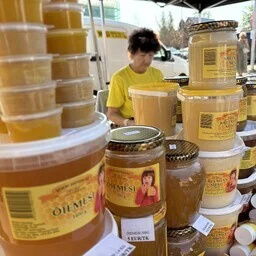
New honey labeling requirements will come into effect on Sunday. Beekeepers believe this will bring fairer competition to the market.
The biggest change concerns honey blends. Previously, it was sufficient to have labels stating, for example, "EU honey" or "honey originating outside the EU." Now, it must be specified exactly how much honey comes from which country. For example: Estonia 50%, Latvia 20%, Lithuania 20%, Poland 10%.
For Estonian beekeepers, not much will change. They already label jars with the honey's origin, such as from Estonia or, for example, from Võrumaa or Saaremaa. The bigger change affects those who blend honey from different countries.
Beekeepers hope the new rules will help prevent fraud. Some mix honey with artificially produced syrups. It looks and smells like honey, but it is not pure honey. The new rules will also help with oversight.
Another issue is origin fraud. Some sell honey imported from abroad as Estonian honey. This is common in the EU. Some countries import a lot of honey because they do not produce enough themselves.
Estonian beekeepers produce enough honey for Estonian consumers. Some years the yield is larger, some years smaller. Last year, production was lower, but stocks were sufficient. Honey will start being labeled according to the new rules from Sunday, but old products can be sold until stocks run out.