
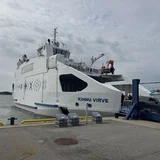
Veel nädal tagasi oli Kihnu Veeteedel plaanis streikida.
Streik oleks
häirinud laevade liiklust
maa ja saarte vahel.
häirinud laevade liiklust
Tõlge fraasile: häirinud laevade liiklust
EN
disrupted ship traffic
Nüüd on streik jäänud ära, sest Eesti Meremeeste Sõltumatu Ametiühing (EMSA) ja Kihnu Veeteed
jõudsid kokkuleppele
.
jõudsid kokkuleppele
Tõlge fraasile: jõudsid kokkuleppele
EN
reached an agreement
Kokkuleppega jääb ära plaanitud streik, mis pidi algama 18. septembril.
Uue lepinguga pandi paika
töötajate palgad
.
töötajate palgad
Tõlge fraasile: töötajate palgad
EN
employees' salaries
Töötajad saavad ka
tulemustasu
, mis võib olla kuni 5%.
tulemustasu
Tõlge fraasile: tulemustasu
EN
performance bonus
Tõuseb ka
toiduraha
ja alates 2028. aastast kasvavad
töötajate palgad
koos Eesti keskmise palgaga.
toiduraha
Tõlge fraasile: toiduraha
EN
meal allowance
töötajate palgad
Tõlge fraasile: töötajate palgad
EN
employees' salaries
EMSA esimees Jüri Lember ütles, et oluline on madruste töötasu, mis on umbes 1650 eurot.
10. septembril oli ametiühing veel streigi ettevalmistamise faasis.
Streik pidi algama 18. septembri südaööl.
Lember rõhutas, et streik ei ole kunagi eesmärk, vaid
viimane võimalus
.
viimane võimalus
Tõlge fraasile: viimane võimalus
EN
last resort
Uus
kollektiivleping
kehtib kolm aastat või kuni Kihnu Veeteede praeguste laevaliinide teenindamise lõpuni.
kollektiivleping
Tõlge fraasile: kollektiivleping
EN
collective agreement
Kui liinidele tuleb uus vedaja, lähevad enamik töötajaid tõenäoliselt
uue tööandja juurde
.
uue tööandja juurde
Tõlge fraasile: uue tööandja juurde
EN
to a new employer
EMSA on teinud ka
ettepaneku haru
kollektiivleping
u sõlmimiseks
.
kollektiivleping
Tõlge fraasile: kollektiivleping
EN
collective agreement
ettepaneku haru
kollektiivleping
u sõlmimiseks
kollektiivleping
Tõlge fraasile: kollektiivleping
EN
collective agreement
Tõlge fraasile: ettepaneku haru
kollektiivleping
u sõlmimiseks
kollektiivleping
Tõlge fraasile: kollektiivleping
EN
collective agreement
EN
proposal to conclude a sectoral collective agreement
See leping laieneks tulevikus
parvlaevaliinidele
ja
reguleeriks tööaega
ja
minimaalset töötasu
.
parvlaevaliinidele
Tõlge fraasile: parvlaevaliinidele
EN
to ferry lines
reguleeriks tööaega
Tõlge fraasile: reguleeriks tööaega
EN
would regulate working hours
minimaalset töötasu
Tõlge fraasile: minimaalset töötasu
EN
minimum wage
Reisijate jaoks tähendab see, et
streigist tingitud probleeme ei tule
.
streigist tingitud probleeme ei tule
Tõlge fraasile: streigist tingitud probleeme ei tule
EN
no problems caused by the strike will occur
Just a week ago, Kihnu Veeteed planned to go on strike.
The strike would have disrupted ship traffic between the mainland and islands.
Now the strike has been called off as the Estonian Seafarers' Independent Union (EMSA) and Kihnu Veeteed reached an agreement.
With the agreement, the planned strike that was set to begin on September 18th is cancelled.
The new agreement establishes employee wages.
Employees will also receive performance bonuses of up to 5%.
Meal allowances will increase, and starting from 2028, employee wages will grow along with the Estonian average wage.
EMSA chairman Jüri Lember stated that it's important for sailors' wages to be around 1650 euros.
On September 10th, the union was still in the strike preparation phase.
The strike was supposed to begin at midnight on September 18th.
Lember emphasized that a strike is never the goal, but rather the last resort.
The new collective agreement is valid for three years or until the end of service on Kihnu Veeteed's current ship routes.
If a new operator takes over the routes, most employees will likely move to the new employer.
EMSA has also proposed to conclude a sectoral collective agreement.
This agreement would in future be extended to ferry lines and regulate working hours and minimum wages.
For passengers, this means there will be no problems caused by the strike.