
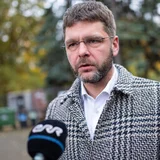
Jevgeni Ossinovski said that universal health insurance is an old idea. However, Estonia has a special situation because nearly 10% of people don't have health insurance. This doesn't fit with the logic of a solidary healthcare system.
Ossinovski said that the lack of health insurance doesn't mean people can't get medical help. If a person becomes seriously ill, they can still get help through emergency services. However, such help is much more expensive for the state.
Universal health insurance wouldn't significantly increase state expenditures. Healthcare funding problems come from demographic changes as the population ages and medicine becomes more expensive.
Estonia's solidary health insurance is based on three principles: the young pay for the treatment of the elderly, the wealthy pay for the treatment of the poor, and the healthy pay for the treatment of the sick.
In Ossinovski's opinion, there aren't many possibilities to raise the social tax. We could discuss whether it's fair that some people avoid paying social tax.
If healthcare doesn't get more funding, people's own contributions to medical expenses will increase and more services will move to the private sector. Wealthier people will be able to afford paid medical services, while poorer people won't.
Ossinovski said that society must understand that indecision also has its price. Education and healthcare in Estonia are based on solidarity. All children should have equal rights to good education and medical treatment.
Additionally, Ossinovski considers unified hospital management necessary. He believes all hospitals should belong to the state so healthcare resources could be planned more efficiently.