
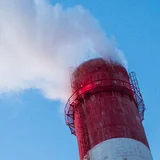
The Environmental Committee discussed amendments to the climate law on Thursday.
The goal is to reduce Estonia's carbon emissions. Obligations are only for the public sector. The private sector must rely on technology.
Yoko Alender, chair of the Environmental Committee, said that roadmaps do not impose new obligations.
Criticism comes from the fact that private companies have no obligations. The main goal is to establish the state's emission reduction plan.
Alender said that technology is developing rapidly. Laws must change accordingly.
The US economy is growing thanks to artificial intelligence. It consumes a lot of energy and water. We must look towards clean technologies.
Alender noted that Estonia has adopted a nuclear energy law. Nuclear energy is clean energy and is growing rapidly.
The opposition Social Democrats are not satisfied. They say the law has text but lacks substance.
Tiit Maran said that roadmaps have no real impact. He wants a climate council that provides a scientific basis.
Maran noted that change in the economy is necessary. The transition to green energy is difficult but necessary.
The state budget is in deficit. How can the state help the economy change?
Maran said we have multiple crises at once. Solving them is difficult but necessary.
The development of the climate law cost 375,000 euros and took three years. The law passed in the Riigikogu on June 9.