
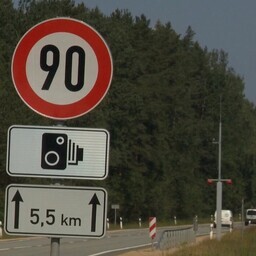
Starting from Wednesday, average speed monitoring will begin on the Tallinn-bound highway A1 from Vitrupe to Svētciems (kilometers 74.6-81.1), on the Liepāja highway (A9) between kilometers 9.9-23.1, and on the Liepāja highway (A9) from Blīdene to Brocēni (between 80.0–93.6 km), as reported by Latvian national broadcaster LSM.
The traffic cameras installed on these sections will, in addition to monitoring average vehicle speed, also check the validity of mandatory motor insurance (OCTA) and technical inspections, as well as road usage fee payments.
In total, 17 new average speed regulation sections are planned to be installed on Latvian state roads this year, with 14 to be built between March and May on the following sections: Vidzeme highway (A2) section 72.25–77.15 km; Valmiera highway (A3) from Stalbe to Rubene (40.1–55.6 km); Daugavpils highway (A6) from Dzelme to Upleja (66.1–77.0 km); Liepāja highway (A9) from Apšupe to Tiltiņi (39.1–56.7 km); Ventspils highway (A10) between roundabouts near Tukums (63.4–68.0 km).
New camera sections will also be installed on the Riga bypass (A4) and (A5). On the Tīnūži–Koknese (P80) highway from Tīnūži to Ziediņi (0.5–1.8 km) and from the two-level intersection with the Augšlīgatne–Skrīveri (P32) highway to the roundabout near Koknese (40.9–60.1 km), cameras will be installed.
The traffic cameras will be installed by the company SIA Reck for 1.99 million euros (including VAT). The costs include the supply and installation of control devices, as well as maintenance of the devices and system for five years.
Currently, there are 16 average speed measurement sections in use on state roads.