
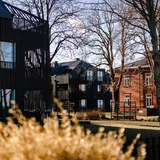
Residents of Kopli lines pay over 40% more for heating than other residents of Tallinn. Technically, it would be possible to connect the area to the city's heating network. However, it would cost two million euros. The city cannot force private companies to enter into contracts.
Kristjan Järvan, Deputy Mayor of Tallinn, said that the distance between the two heating networks is about 900 meters. The investment would be nearly two million euros. Utilitas stated that there are no technical obstacles to the connection. The company is ready to discuss possibilities but is waiting for initiative from Fund Ehitus.
Fund Ehitus believes that heating costs will decrease if the area is further developed. The second phase of the project includes new houses, shops, cafes, and a kindergarten. Reigo Marosov, CEO of Fund Ehitus, said that more clients would allow maintenance costs to be shared among more people.
Residents of Kopli lines do not want to wait until the construction is completed. Pille Jansen Koppel, a board member of Kopli Lines, said that the rent for the boiler house and heating infrastructure accounts for a quarter of the heating costs. SW Energia pays this rent to Fund Ehitus, and it is added to the residents' bills.
Joosep Vimm, a member of the Tallinn City Council, calculated that over the past year, residents of Kopli lines have paid approximately 85,000 euros more for heating. He says that Tallinn should help find a solution because the city owns a third of Utilitas Tallinna Soojus.
The price of heat energy in Kopli lines is 109.65 euros per megawatt-hour. Tallinn's main heating network operates at 77.82 euros per megawatt-hour. In October, it was reported that the city is ready to discuss the connection, but there are no plans yet.