
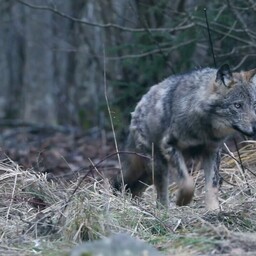
The Environment Agency has increased the wolf hunting quota. Initially, 84 wolves were allowed to be hunted this hunting season. Now, an additional 28 wolves and another 18 wolves are permitted. In total, 130 wolves are allowed to be hunted.
A wolf researcher says that hunting 130 wolves will affect wolf packs. However, the quota is not too large.
Tanel Türna, the director of the Environment Agency, explained that the number of wolves in Estonia has increased. Currently, at least 29 wolf dens are known. The number of wolves should remain between 20-30 dens.
To prevent the wolf population from growing too large, it is necessary to increase the hunting quota. The Environment Agency has granted permission to hunt an additional 18 wolves in regions where the wolf population needs to be controlled.
As of January 2, 55 wolves have been hunted in Estonia. In addition, several wolves can be hunted in different regions.
Wolf researcher Maris Hindrikson says that the exact number of wolves is not known. The new hunting quota is not too large. Hunting a breeding female or male wolf is not good for the stability of the packs.
Hindrikson says that society has accepted the increase in the hunting limit. Humans have a significant impact on wolves. In Europe, 80% of wolf deaths are related to humans.
Zoologist Hindrikson recommends preventive measures to avoid wolf damage. Dogs should be kept indoors or in outbuildings. Traditional sheep herding methods also help.
The state should invest in prevention to reduce damage. Wolf damage and wolf hunting are not directly related.
The Environment Agency's order can be contested within 30 days.