
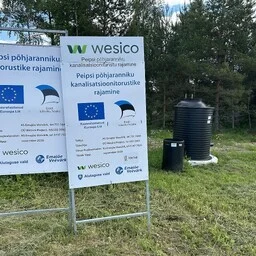
Keskkonnaamet otsustas, et
Kauksi reoveepuhastussüsteem saab töötada väiksema koormusega
. See maksis ligi viis miljonit eurot. Kanalisatsiooniga saab liituda vaid kohalik spaa, mitte elanikud. Võib olla, et
toetused tuleb tagasi maksta
.
Kauksi reoveepuhastussüsteem saab töötada väiksema koormusega
Tõlge fraasile: Kauksi reoveepuhastussüsteem saab töötada väiksema koormusega
EN
Kauksi wastewater treatment system can operate with a lower load
toetused tuleb tagasi maksta
Tõlge fraasile: toetused tuleb tagasi maksta
EN
subsidies will need to be repaid
Peipsi põhjapiirkonna heitvett lastakse Kauksi ojja
. See ojja suubub Peipsi järve.
Keskkonnaamet lubab lasta loodusesse vähem heitvett
kui taotletud. Ööpäevas lastakse ligi kaks kolmandikku vähem.
Peipsi põhjapiirkonna heitvett lastakse Kauksi ojja
Tõlge fraasile: Peipsi põhjapiirkonna heitvett lastakse Kauksi ojja
EN
wastewater from the northern region of Peipsi is discharged into Kauksi stream
Keskkonnaamet lubab lasta loodusesse vähem heitvett
Tõlge fraasile: Keskkonnaamet lubab lasta loodusesse vähem heitvett
EN
the Environment Agency allows less wastewater to be discharged into nature
Keskkonnaameti juhataja Triin Mägi ütles, et oja vool on väike. Kui sinna tuleb liiga palju saasteaineid, võib see olla halb taimestikule ja elustikule. Keskkonnaamet kontrollib kanalisatsiooni neli aastat. Esimesed tulemused saadakse aasta pärast käivitamist.
Alutaguse vallavalitsus arvab, et keskkonnaamet oleks pidanud lubama rohkem heitvett. Siis oleks saanud kanalisatsiooniga liituda ka elanikud. Nüüd peavad elanikud otsima muid lahendusi.
Emajõe veevärk ütles, et mahupiirangud tulid ootamatult. Projekti juht Margus Sinimäe ütles, et
probleemid oleks pidanud ilmuma projekti kooskõlastamisel
.
probleemid oleks pidanud ilmuma projekti kooskõlastamisel
Tõlge fraasile: probleemid oleks pidanud ilmuma projekti kooskõlastamisel
EN
problems should have emerged during project coordination
Alutaguse valla liige Liina Talistu ütles, et enne ehitusloa andmist tehti keskkonnamõjude hinnang. Torustikke polnud veel ehitatud ega rahastust taotletud. Nüüd on torustikud valmis, aga olukord on erinev.
Projekt maksis 4,7 miljonit eurot. Seda rahastati toetustega. Kui elanikud ei saa kanalisatsiooniga liituda, võib olla, et
toetused tuleb tagasi maksta
.
toetused tuleb tagasi maksta
Tõlge fraasile: toetused tuleb tagasi maksta
EN
subsidies will need to be repaid
Kohalikud kardavad, et
heitvesi ohustab Kauksi oja, Peipsi randa ja põhjavett
. Nad tahavad luba vaidlustada.
heitvesi ohustab Kauksi oja, Peipsi randa ja põhjavett
Tõlge fraasile: heitvesi ohustab Kauksi oja, Peipsi randa ja põhjavett
EN
wastewater threatens Kauksi stream, Peipsi shore, and groundwater
Kohalik elanik Tõnis Rohtma ütles, et
piirkonna pinnas on poorne ja liivane
. Heitvesi imendub kiiresti ja see mõjutab põhjavett. Tiia Pukk küsis, miks heitvesi lastakse otse turismipiirkonda.
piirkonna pinnas on poorne ja liivane
Tõlge fraasile: piirkonna pinnas on poorne ja liivane
EN
the soil in the area is porous and sandy
Keskkonnaamet pakub alternatiivi:
heitvee suunamine Rannapungerja jõkke
. See asub Kauksi ojast kaugemal ja oleks kallim.
heitvee suunamine Rannapungerja jõkke
Tõlge fraasile: heitvee suunamine Rannapungerja jõkke
EN
redirecting wastewater to the Rannapungerja river
Keskkonnaamet ja vee-ettevõte kohtuvad järgmisel nädalal, et leida lahendus.
The Environmental Board decided that the Kauksi wastewater treatment system can operate with a smaller load. It cost nearly five million euros. Only the local spa can connect to the sewage system, not the residents. It may be that the subsidies will have to be repaid.
The wastewater from the northern Peipsi region is discharged into the Kauksi stream. This stream flows into Lake Peipsi. The Environmental Board allows less wastewater to be discharged than requested. Nearly two-thirds less is discharged per day.
Triin Mägi, the head of the Environmental Board, said that the stream has a low flow. If too many pollutants enter it, it could be harmful to the flora and fauna. The Environmental Board will monitor the sewage system for four years. The first results will be obtained a year after the system is launched.
The Alutaguse municipality believes that the Environmental Board should have allowed more wastewater to be discharged. Then residents could also connect to the sewage system. Now residents have to look for other solutions.
The Emajõe Waterworks said that the capacity limits came unexpectedly. Margus Sinimäe, the project manager, said that the problems should have appeared during the project's coordination.
Liina Talistu, a member of the Alutaguse municipality, said that an environmental impact assessment was done before the construction permit was issued. The pipelines had not yet been built nor had funding been applied for. Now the pipelines are ready, but the situation is different.
The project cost 4.7 million euros. It was funded by subsidies. If residents cannot connect to the sewage system, it may be that the subsidies will have to be repaid.
Locals fear that the wastewater will endanger the Kauksi stream, the Peipsi shoreline, and groundwater. They want to dispute the permit.
Local resident Tõnis Rohtma said that the soil in the area is porous and sandy. Wastewater is absorbed quickly, affecting groundwater. Tiia Pukk asked why wastewater is discharged directly into the tourist area.
The Environmental Board offers an alternative: redirecting the wastewater to the Rannapungerja River. It is located further from the Kauksi stream and would be more expensive.
The Environmental Board and the water company will meet next week to find a solution.