
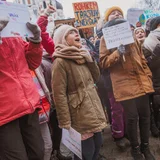
Justiits- ja digiministeerium soovib muuta seadust
. Praegu peavad meeleavalduse korraldajad olema täisealised. Uue seaduse järgi võivad meeleavaldusi korraldada ka 14-aastased.
Justiits- ja digiministeerium soovib muuta seadust
Tõlge fraasile: Justiits- ja digiministeerium soovib muuta seadust
EN
The Ministry of Justice and Digital Affairs wants to change the law
Rahumeelsed koosolekud ja kogunemised on demokraatia jaoks väga tähtsad
. Nii täiskasvanutel kui lastel on õigus oma arvamust avaldada.
Lapsed peaksid saama ühinguid luua ja rahumeelselt koos käia
.
Rahumeelsed koosolekud ja kogunemised on demokraatia jaoks väga tähtsad
Tõlge fraasile: Rahumeelsed koosolekud ja kogunemised on demokraatia jaoks väga tähtsad
EN
Peaceful gatherings and meetings are very important for democracy
Lapsed peaksid saama ühinguid luua ja rahumeelselt koos käia
Tõlge fraasile: Lapsed peaksid saama ühinguid luua ja rahumeelselt koos käia
EN
Children should be able to create associations and gather peacefully
Seadus loeb, et 14-aastane inimene vastutab ise oma tehtud eest. Ka politsei näeb, et selles eas inimesed saavad aru oma vastutusest. Seetõttu peaksid 14-aastased saama koosolekuid korraldada.
Justiits- ja digiminister Liisa Pakosta ütleb, et noored peaksid saama rohkem oma arvamust avaldada. "
Noorte hääl on tähtis
," ütles ta. Ta lisas, et noored ei peaks ootama täiskasvanut, kes nende eest koosolekut korraldab.
Noorte hääl on tähtis
Tõlge fraasile: Noorte hääl on tähtis
EN
The voice of youth is important
Minister rõhutas, et noored ei jääks täiesti ilma abita.
Lapsevanem peab tegema järelevalvet
kuni lapse 18. eluaastani. Samuti tuleb politseile alati ette teatada, kui alaealised koosolekut korraldavad.
Lapsevanem peab tegema järelevalvet
Tõlge fraasile: Lapsevanem peab tegema järelevalvet
EN
The parent must supervise
Koosoleku turvalisuse eest vastutab selle korraldaja
. See kehtib ka alaealiste korraldatud koosolekute puhul. "Kui noored saavad oma arvamust avaldada, peavad nad ka vastutama turvalisuse eest," ütles Pakosta.
Koosoleku turvalisuse eest vastutab selle korraldaja
Tõlge fraasile: Koosoleku turvalisuse eest vastutab selle korraldaja
EN
The organizer is responsible for the safety of the meeting
Eesti õpilasesinduste liidu esimees Karl Erik Kirski sõnul on muudatus väga hea. "
Meeleavaldused näitavad demokraatia elujõulisust
," ütles ta. Kirss rääkis, et vana seadus oli liiga raske ja bürokraatiline.
Meeleavaldused näitavad demokraatia elujõulisust
Tõlge fraasile: Meeleavaldused näitavad demokraatia elujõulisust
EN
Protests show the vitality of democracy
Kirss ütles, et alaealised ei korralda väga tihti meeleavaldusi. Ta meenutas Rootsi aktivisti Greta Thunbergi, kes korraldas meeleavaldusi alles noorena.
Kirss arvab, et meeleavaldused on Eestis muutunud tavalisemaks. Ta ütles, et meeleavalduste puhul on riigil suurem vastutus jälgida, et need jääksid rahumeelsed. "Aga see ei ole põhjus, miks 14-aastased ei peaks meeleavaldusi korraldama," ütles ta.
Kirss lisas, et noortevolikogud ja õpilasesindused peaksid rohkem meeleavaldustega tegelema. Ta ütles, et 14-aastased avaldavad oma arvamust juba praegu. "Meil on lihtsalt seni olnud meeleavalduste korraldamisel käed seotud," ütles Kirss.
The Ministry of Justice and Digital Affairs wants to amend the law. Currently, organizers of demonstrations must be adults. According to the new law, 14-year-olds will also be able to organize demonstrations.
Peaceful assemblies and gatherings are very important for democracy. Both adults and children have the right to express their opinions. Children should be able to form associations and gather peacefully.
The law states that a 14-year-old person is responsible for their own actions. The police also see that people of this age understand their responsibilities. Therefore, 14-year-olds should be able to organize gatherings.
Minister of Justice and Digital Affairs Liisa Pakosta says that young people should be able to express their opinions more. "The voice of young people is important," she said. She added that young people should not wait for an adult to organize a gathering for them.
The Minister emphasized that young people would not be left entirely without assistance. A parent must supervise the child until their 18th birthday. The police must also always be notified when minors organize a gathering.
The organizer is responsible for the safety of the gathering. This also applies to gatherings organized by minors. "If young people can express their opinions, they must also take responsibility for safety," said Pakosta.
According to Karl Erik Kirski, chairman of the Estonian Pupils' Union, the change is very good. "Demonstrations show the vitality of democracy," he said. Kirski mentioned that the old law was too strict and bureaucratic.
Kirski said that minors do not organize demonstrations very often. He recalled Swedish activist Greta Thunberg, who organized demonstrations while still young.
Kirski believes that demonstrations have become more common in Estonia. He said that the state has a greater responsibility to ensure that demonstrations remain peaceful. "But that is not a reason why 14-year-olds should not organize demonstrations," he said.
Kirski added that youth councils and pupil unions should be more involved in demonstrations. He said that 14-year-olds already express their opinions. "We have simply had our hands tied when it comes to organizing demonstrations," said Kirski.