
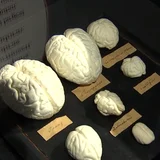
The University of Tartu Museum's exhibition "Brain Freedom Lab" is now open. The exhibition is inspired by neuroscientist Jaan Aru's book. It helps understand how the human brain works and develops. The exhibition is playful and focuses on children's concentration, learning, and mental well-being.
At the exhibition, visitors can experiment with how daily activities affect our thinking. The exhibition explains what it means when the brain is truly free. Neuroscientist Klaus-Peeter Ladva says: "Brain freedom means we can do what we want – learn and discover."
At the exhibition, children can explore independently. For example, they can first guess the weight or length of objects and then measure them. This teaches that making mistakes is normal and human.
The exhibition also has a space where visitors can consciously take a break. For example, there is a "boredom cave." It is designed for simply being and being a little bored. This helps bring out creativity.
Screen time is not banned at the exhibition. Instead, children can build their dream day from blocks. This helps understand the impact of digital devices on attention. Klaus-Peeter Ladva says: "If you decide what to do tomorrow, would you choose three hours on your smartphone? Probably not. This shows we are not always free to make our own choices."
The exhibition will remain a permanent display at the University of Tartu Museum. Everyone who wants to learn more about the brain and its freedom is welcome to visit.