
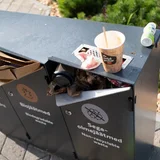
Currently, waste collection costs are mainly covered by local municipalities and public sector institutions. This means the money comes from taxpayers.
There are many single-use plastic products in public spaces, such as food packaging, beverage cups, and tobacco products. These fall under producer responsibility.
The European Union follows the 'polluter pays' principle. This means manufacturers must help cover the cleanup costs of their products.
This is not a new requirement. Estonia already adopted this principle in 2023. However, precise guidelines were not written into the law at that time.
By 2027, a producer organization should be established. They must collect information about their products.
In 2029, municipalities will receive the first reimbursements. These will be based on waste collection costs from 2028.
So far, municipalities have lost about 1.5 million euros annually. This is because the system did not start operating on time.
For example, Viimsi municipality spends about 50,000 euros per year on waste collection. Most of this consists of public space cleaning, waste removal, and maintenance work.
When the producer responsibility system starts operating, it will help cover part of the waste collection costs. It will also reduce the burden on local municipalities.